Best poolside landscaping ideas for East Texas homes
You've decided to build a pool. Smart move.
But here's what catches most people off guard, the landscaping around your pool matters just as much as the pool itself.
Maybe more.
I've built hundreds of custom gunite pools across East Texas. Longview, Tyler, Marshall, Kilgore, you name it. And I can tell you this: a beautiful pool with terrible landscaping is like buying a Ferrari and parking it in a mud pit.
The good news?
Our East Texas climate actually works in your favor if you make the right choices. Clay soil, humidity, intense summer heat, these aren't problems. They're just factors you need to plan for.
Let me walk you through the five landscaping approaches I see work best around pools in our area. These aren't just pretty pictures from Pinterest. These are real solutions that hold up to our weather and make your backyard a place you'll actually want to spend time.
Table of Contents
Travertine and Stone Decking (Stays Cool in Texas Heat)
Concrete Decking with Decorative Finishes (Low Maintenance Winner)
Tropical Plants That Actually Survive East Texas
Outdoor Living Integration (Fire Pits, Kitchens, Cabanas)
Lighting and Hardscape Features
How to Choose the Right Poolside Landscaping for Your Home
Quick Comparison of Five Landscape Options
FAQ
Conclusion
1. Travertine and Stone Decking (Stays Cool in Texas Heat)
Let's start with the most popular choice I see, and for damn good reason.
Travertine is a natural stone that stays significantly cooler than concrete, even when it's 95 degrees and the sun is beating down. We're talking up to 20% cooler. That means your kids can run around barefoot without doing the hot-foot dance across the deck.
I've had clients tell me they can walk on their travertine deck in August at noon without shoes. Try that with dark concrete and you'll be hopping back inside real quick.
Why Travertine Works in East Texas
Our climate is brutal on outdoor surfaces. Intense UV exposure, high humidity, and those clay soils that expand and contract with every rain.
Travertine handles all of it because it's naturally porous, water drains through instead of pooling on top. Light colors reflect heat instead of absorbing it. The texture provides natural slip resistance when wet. And it doesn't crack as easily as concrete when the ground shifts.
The most common types I see are ivory, walnut, and silver travertine. Ivory is the lightest and stays the coolest. Walnut has more color variation if you want something with character.
Investment Considerations
Travertine is a premium material. It's an investment in comfort and longevity. If staying cool underfoot matters to you, if you want that high-end resort look, and if you're planning to be in your home long-term, it's worth considering.
That said, there are excellent alternatives that work beautifully in our climate if travertine doesn't fit your budget. I'll get to those.
Maintenance Reality
Travertine needs to be sealed every 2-3 years to protect it from staining and weathering. It's not hard, you can do it yourself with a pump sprayer and a Saturday afternoon.
Some people worry about the natural pitting in travertine collecting dirt. Honestly, I don't see it as a problem. A quick rinse with the hose keeps it clean, and the texture is part of what makes it look natural instead of sterile.
2. Concrete Decking with Decorative Finishes (Low Maintenance Winner)
If travertine is the luxury option, concrete is the workhorse.
Don't let that fool you into thinking it's boring. Modern concrete finishes can look just as good as stone, and they're way more budget-friendly.
I've built pools with stamped concrete that mimics travertine, slate, even wood grain. Most people can't tell the difference until they get up close.
Your Concrete Options
Broom Finish (Basic but Functional)
This is your standard textured concrete. It's slip-resistant, durable, and the most economical option.
It's not fancy, but it works. If you're putting most of your budget into the pool itself and just need a solid, functional deck, this is the move.
Stamped Concrete (Best Bang for Your Buck)
This is where you get patterns pressed into the concrete to look like stone, brick, or tile. You can add color too.
You get that high-end look without the premium price tag. The key is getting a good contractor who knows how to seal it properly. Poorly sealed stamped concrete will fade and peel in a few years. Done right, it lasts 15-20 years easy.
Stained or Polished Concrete (Modern Look)
If you like the sleek, contemporary vibe, acid-stained or polished concrete looks amazing. You get rich, variegated colors that don't fade.
The investment is closer to natural stone, but you get a totally different aesthetic, more modern, less traditional.
The Clay Soil Factor
Here's what you need to know about concrete in East Texas: our clay soil moves. A lot.
When it rains, clay swells. When it dries out, it shrinks. That movement puts stress on your concrete slab.
To handle this, I make sure to pour a proper base with compacted gravel to allow drainage, add control joints every 8-10 feet to let the concrete crack where we want it to (not randomly), and slope the deck away from the pool at least 1-2% so water runs off instead of pooling.
I've seen too many pool decks crack and heave because someone skipped these steps. Don't let that be you.
Heat Considerations
The one downside? Concrete gets hot. Really hot.
If you go with a dark color or leave it unsealed, it'll absorb heat like crazy. Your best bet is to choose a light color and keep it sealed. That helps reflect heat and makes it more comfortable underfoot.
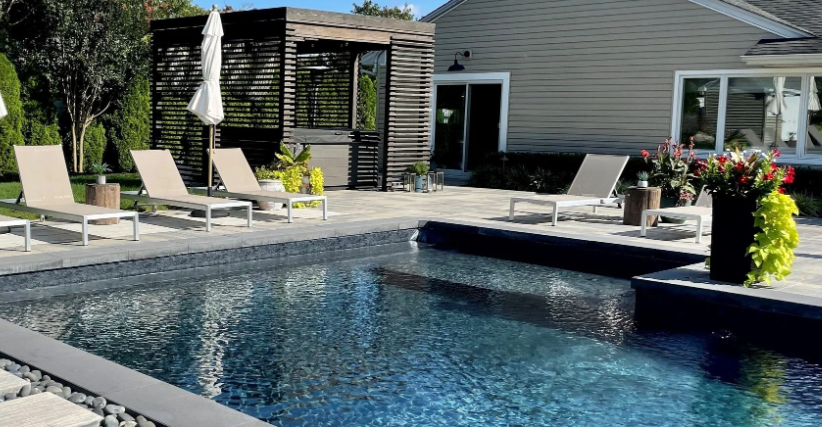
Or you can do what a lot of my clients do, put a pergola or shade structure over part of the deck so you've got a cool zone to retreat to.
3. Tropical Plants That Actually Survive East Texas
Now let's talk plants.
You want that resort vibe, palms, tropical flowers, lush greenery. But you also don't want to spend every weekend watering and pruning, or worse, watching your plants die in the July heat.
Good news: there are plenty of plants that thrive in our climate and look amazing around a pool.
Palm Trees (Yes, They Work Here)
A lot of people don't realize you can grow palms in East Texas. We're in USDA hardiness zones 8a and 8b, which means we get occasional freezes but nothing sustained.
The palms that do well here:
Windmill Palm – The most cold-hardy palm, handles our occasional winter freezes without issue
Sago Palm – Technically not a true palm, but looks like one and is nearly indestructible
Needle Palm – Another cold-hardy option, slower growing but very tough
I see these all the time around pools. They give you that tropical look without the maintenance headache.
Plant them on the south or west side of your pool where they'll get full sun. They're drought-tolerant once established, so you're not constantly watering.
Native Texas Plants (The Smart Choice)
If you want plants that practically take care of themselves, go native.
These are plants that evolved in our climate. They handle heat, humidity, clay soil, and drought without breaking a sweat.
Texas Sage (Cenizo)
Silvery-gray foliage with purple blooms after summer rains. Needs almost zero water once established. Looks stunning against a light-colored deck.
Lantana
Bright clusters of orange, yellow, red, and purple flowers. Butterflies love it. Blooms all summer. Tolerates heat and drought like a champ.
Mexican Feather Grass
Soft, flowing texture that moves in the breeze. Adds movement and softness to the landscape. Needs basically no maintenance.
Agave and Red Yucca
Sculptural, architectural plants that make a statement. Red yucca produces coral-pink flower spikes that hummingbirds go crazy for.
These plants don't just survive, they thrive. And they won't dump leaves and debris into your pool like some trees do.
What NOT to Plant Near Your Pool
Let me save you some headaches.
Avoid these:
Crape Myrtles – Beautiful, but they drop flowers and seed pods constantly. Your skimmer will hate you.
Oak Trees – Acorns and leaves everywhere. Plus the roots can damage your pool shell over time.
Bamboo (Running Varieties) – Spreads like crazy and the roots are aggressive. Stick with clumping bamboo if you want that look.
Fruit Trees – Sounds nice until rotting fruit is attracting wasps around your pool.
Also, keep plants at least 3-4 feet away from pool equipment. You don't want roots growing into your plumbing or blocking airflow to your pump and filter.
Chlorine and Salt Tolerance
One question I get a lot: won't the chlorine kill my plants?
Not really. Most splashing and spray dissipates before it reaches your plants. But if you're worried, the plants I listed above are all salt-tolerant, which means they handle chlorine just fine.
Lavender, rosemary, and certain ornamental grasses are also very tolerant of pool chemicals.
4. Outdoor Living Integration (Fire Pits, Kitchens, Cabanas)
Here's where your backyard goes from "nice pool" to "I never want to leave this place."
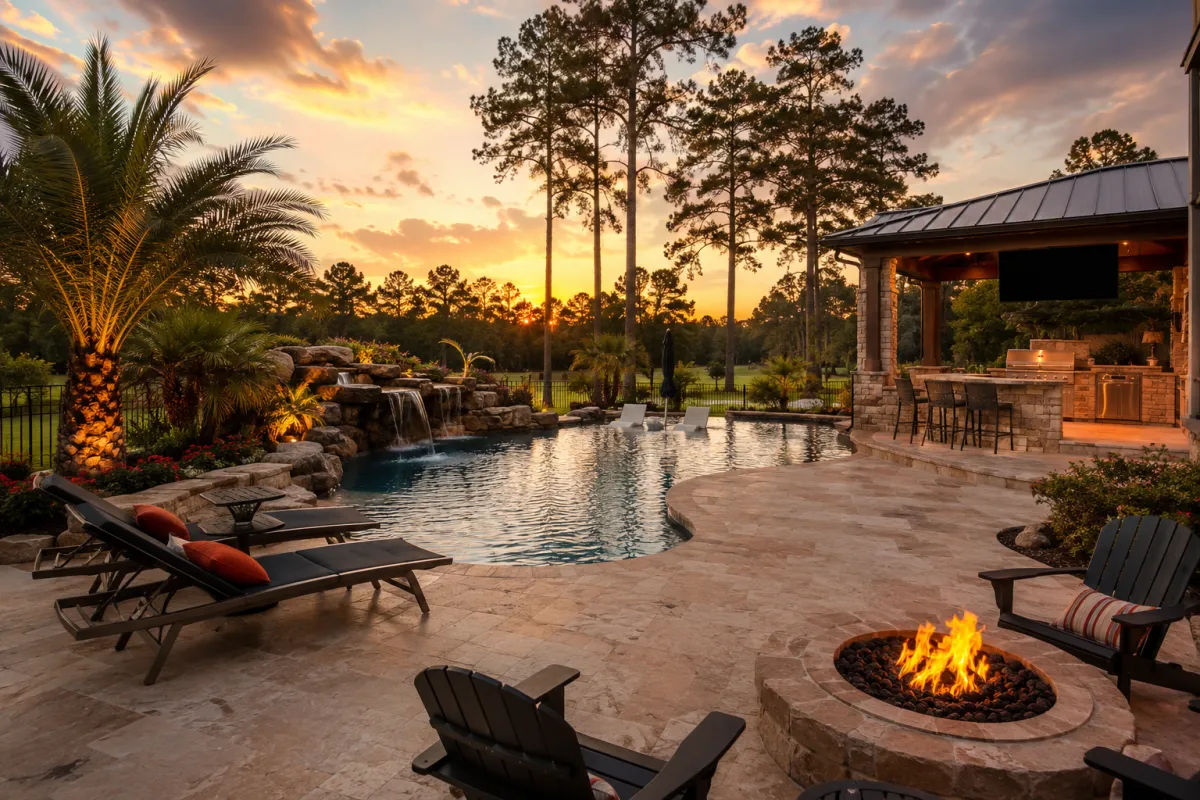
A pool by itself is great. A pool with an outdoor kitchen, fire pit, and covered lounge area? That's a lifestyle upgrade.
I build a lot of pools where the outdoor living space is just as important as the pool itself. Because here's the thing, you're not swimming 24/7. But you'll use a great outdoor space every single day.
Outdoor Kitchens
An outdoor kitchen doesn't have to be elaborate. Even a simple setup with a built-in grill, mini fridge, and counter space makes entertaining way easier.
No more running back and forth to the house. You've got everything you need right there.
I see a lot of clients go with a built-in gas grill, small refrigerator for drinks, sink with running water, counter space for prep, and storage cabinets underneath.
You can start simple and add on later as your budget allows. The key is to position it upwind from the pool (usually north or east side) so smoke doesn't blow over swimmers.
Fire Pits and Fire Bowls
Fire features extend your pool season into fall and early spring. Even when it's too cool to swim, you can sit around the fire with a drink and enjoy the backyard.
Fire Pits
These are usually built into the ground or as a raised stone structure. You can do wood-burning or gas.
Gas is cleaner and easier, just flip a switch. Wood-burning gives you that campfire smell and crackle.
Fire Bowls
These are smaller, often built into the pool's edge or on top of walls. They're more decorative than functional, but they look incredible at night.
I've done raised infinity spas with fire bowls on each side. The fire reflects off the water and creates this dramatic effect that looks like a resort.
Cabanas and Pergolas
Shade is non-negotiable in Texas. You need somewhere to escape the sun.
Pergolas
These are open-roof structures with beams that provide partial shade. You can add retractable fabric or climbing vines for more coverage.
Cabanas
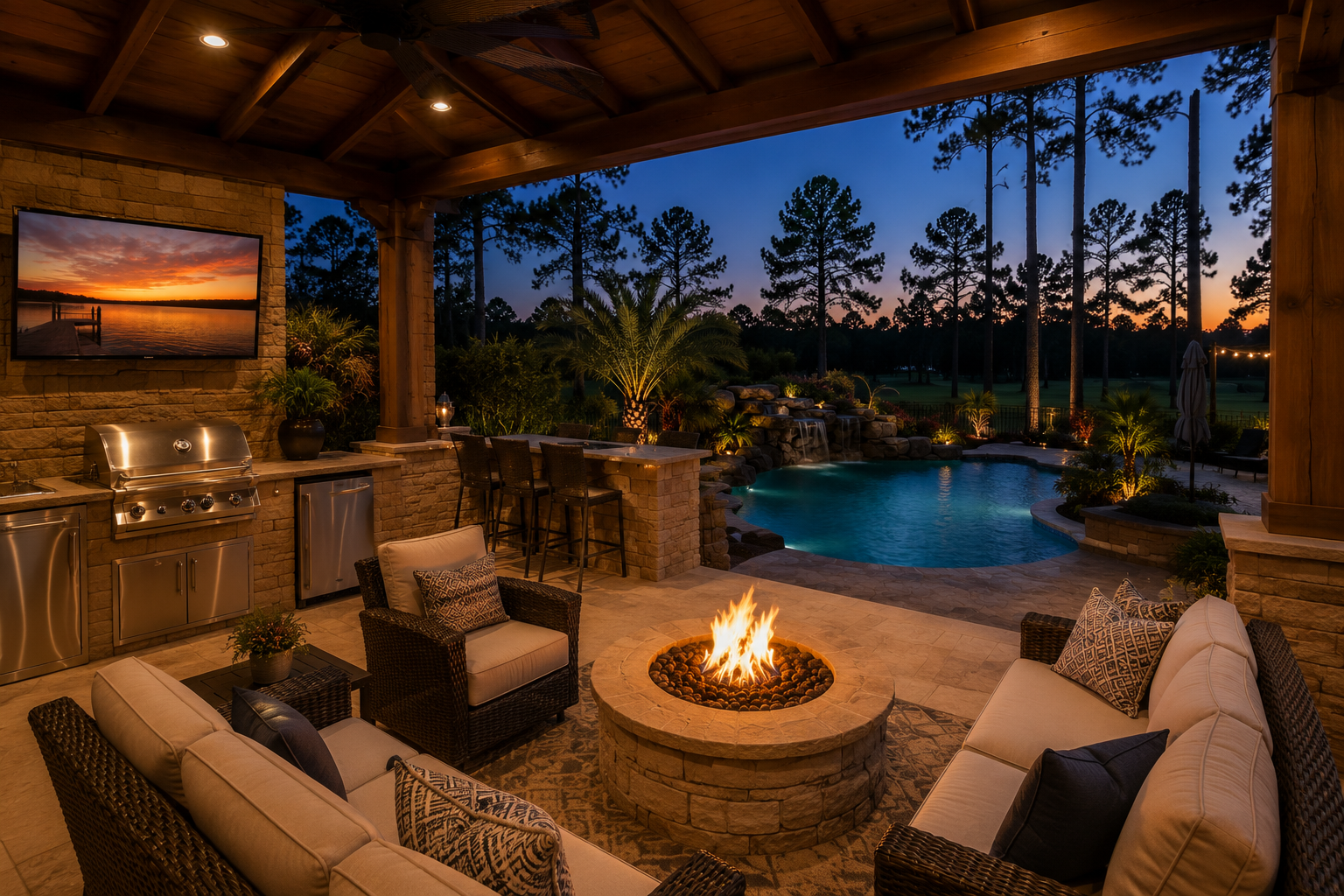
These are fully covered structures with a solid roof. You can add ceiling fans, lighting, even outdoor furniture to create a full lounge area.
Think of it as an outdoor living room. Some clients add TVs, sound systems, and built-in seating.
The ROI on these is huge. You'll use your outdoor space year-round instead of just in the summer.
5. Lighting and Hardscape Features
Lighting is what makes your backyard usable at night, and it's what makes it look incredible.
I can't tell you how many pools I've seen that look amazing during the day and completely disappear after sunset because the lighting is an afterthought.
Don't make that mistake.
Pool Lighting
Modern LED pool lights let you change colors with your phone. You can set the mood, cool blue for a calm vibe, warmer tones for entertaining, or even color-changing modes for parties.
I typically install 2-3 lights in a standard pool, more if it's a large or complex shape.
These lights last 10-15 years and use almost no electricity. It's a no-brainer upgrade.
Landscape Lighting
This is where you really create ambiance.
Path Lighting – Low-voltage lights along walkways and around the pool perimeter. Safety first, but they also guide the eye and make the space feel polished.
Uplighting – Place lights at the base of palm trees, architectural plants, or walls to create dramatic shadows and highlight features.
Accent Lighting – Small spotlights on water features, fire bowls, or outdoor art. These add layers and depth.
String Lights – Cafe-style string lights over a pergola or seating area create a warm, inviting glow. They're inexpensive and make a huge impact.
Hardscape Features
These are the permanent structures that define your outdoor space.
Retaining Walls – If your yard has a slope, retaining walls create level terraces and add visual interest. You can use the same stone as your deck for a cohesive look.
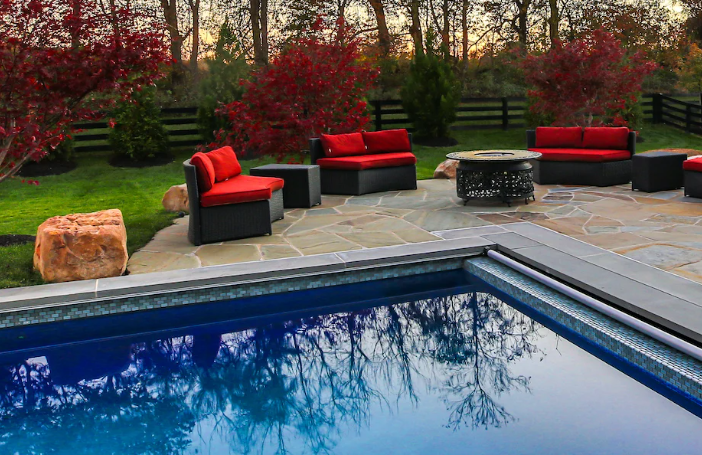
Pathways – Flagstone or paver pathways connect different zones, pool to fire pit, pool to outdoor kitchen. They make the space feel intentional and finished.
Seating Walls – Built-in stone or concrete benches around the pool or fire pit. They provide extra seating without taking up floor space.
These features aren't just decorative. They solve functional problems, managing slope, creating flow, adding seating, while making your backyard look professionally designed.
How to Choose the Right Poolside Landscaping for Your Home
Okay, so you've seen the options. Now how do you actually decide?
Here's how I walk clients through it.
Factor 1: Your Budget
Be honest about what you can spend. There's no point falling in love with travertine if your budget only allows for concrete.
The good news is you can get great results at any price point. It's just a matter of prioritizing what matters most to you.
Think about it in tiers:
Budget-Conscious: Focus on a solid, functional deck with broom-finish concrete, native plants that require minimal water and maintenance, and simple pathway lighting for safety and basic ambiance.
Mid-Range: Step up to stamped or stained concrete for visual appeal, mix native plants with some tropical accents, add an outdoor kitchen or fire pit to extend your living space.
Premium: Invest in travertine or natural stone for maximum comfort and aesthetics, create a complete outdoor living environment with kitchen and covered areas, install comprehensive lighting and hardscape features.
Every project is custom. We can design within your budget and prioritize what matters most to you and your family.
Factor 2: Maintenance Commitment
How much time do you want to spend on upkeep?
If you travel a lot or just don't want to deal with yard work, go for low-maintenance options: concrete over stone (less frequent sealing), native drought-tolerant plants over high-maintenance tropicals, and minimal lawn with more hardscape.
If you love gardening and don't mind watering and pruning, you've got more flexibility with plant choices.
Factor 3: Your Home's Style
Your landscaping should complement your house, not clash with it.
Modern Home: Clean lines, concrete deck, minimalist plantings, geometric shapes
Traditional Home: Stone or stamped concrete, classic plants, symmetrical layout
Rustic/Farmhouse: Natural stone, wood accents, native wildflowers
Mediterranean: Travertine, palms, terra cotta accents
Look at your house and pick materials and plants that feel like a natural extension of that style.
Factor 4: Sun Exposure
Walk your yard at different times of day and see where the sun hits.
Full sun all day? You'll want light-colored decking to stay cool, shade structures over seating areas, and drought-tolerant plants.
Partial shade? You've got more options with deck colors, more plant variety, and less need for extensive shade structures.
Factor 5: Long-Term Vision
Think about how you'll use this space in 5, 10, 15 years.
If you have young kids now, maybe you prioritize play space and keep landscaping simple. As they get older, you can add more sophisticated features.
If you love entertaining, invest in the outdoor kitchen and fire pit from the start. You'll use them constantly.
If resale value matters, go with classic choices that have broad appeal, travertine or quality stamped concrete, neutral colors, timeless design.
Quick Comparison of Five Landscape Options
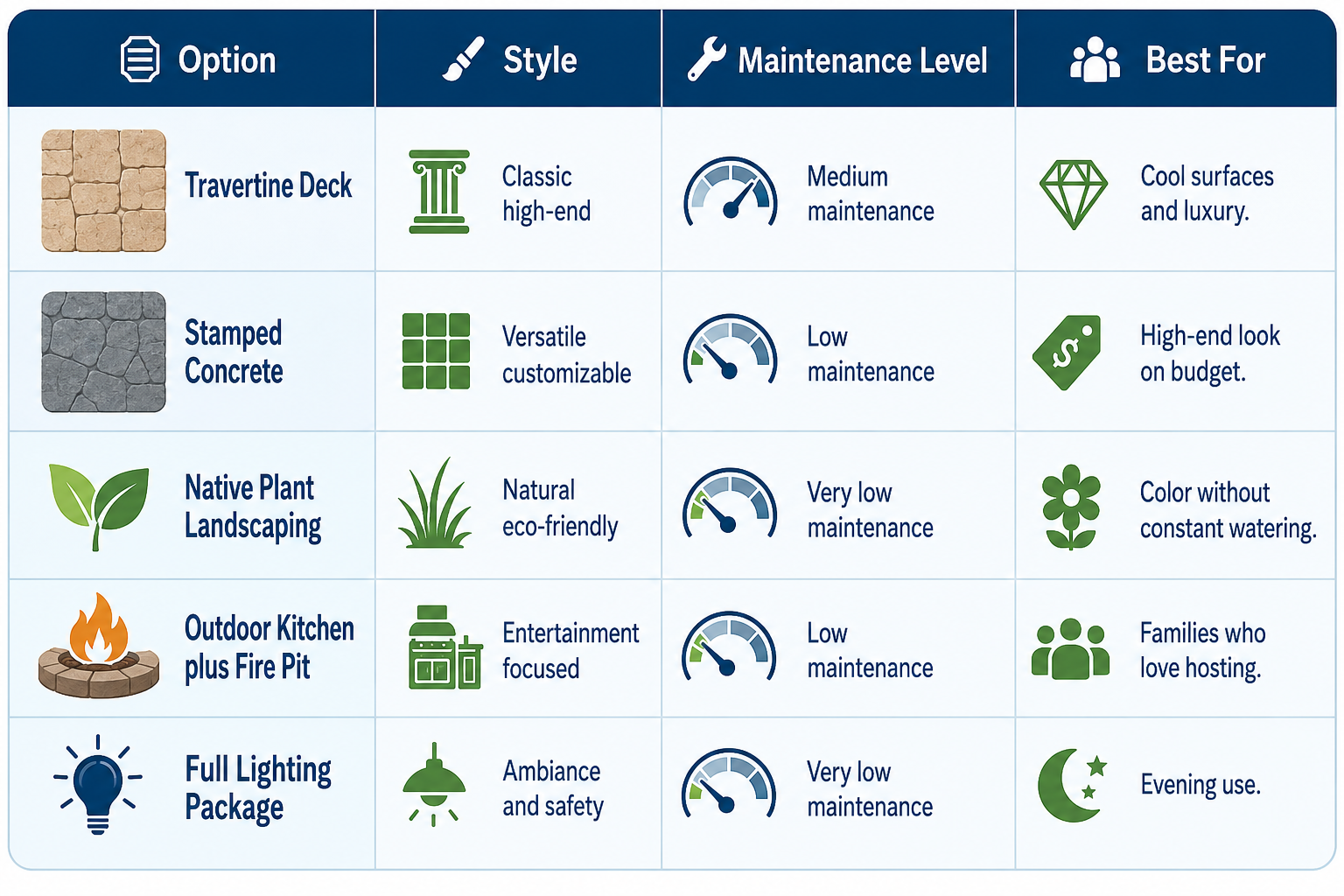
Here's a breakdown to help you compare the five approaches we've covered:
Travertine Deck stays cooler than any other surface, making it the premium choice for comfort. It requires sealing every 2-3 years, but the payoff is a deck you can walk on barefoot even in August. Best for homeowners who prioritize comfort and want that high-end resort look.
Stamped Concrete gives you versatility and visual appeal without the premium price tag. It mimics stone, brick, or tile patterns and needs resealing every 3-5 years. This is your best value option if you want a high-end look on a practical budget.
Native Plant Landscaping is the low-maintenance winner. Once established, these plants need minimal water and care. They're drought-tolerant, handle our climate beautifully, and provide color year-round. Perfect for homeowners who want a lush look without constant upkeep.
Outdoor Kitchen + Fire Pit transforms your pool area into a complete entertainment zone. Low maintenance once installed, these features extend your outdoor season and keep you from running back and forth to the house. Ideal for families who love hosting and want their backyard to be the gathering spot.
Full Lighting Package makes your pool usable after dark and creates incredible ambiance. LED technology means very low maintenance and minimal energy costs. This is a must-have for anyone who wants to enjoy their backyard in the evenings.
Each option serves a different purpose. The best choice depends on how you'll actually use your space, what level of maintenance you're comfortable with, and what matters most to your family.
FAQ
What's the best deck material for East Texas heat?
Travertine wins hands-down for staying cool. It stays up to 20% cooler than concrete even in direct sun. If budget is a concern, go with light-colored stamped concrete and add shade structures over high-traffic areas.
How do I keep plants from damaging my pool equipment?
Keep plants at least 3-4 feet away from pumps, filters, and heaters. Avoid anything with aggressive root systems like running bamboo or large trees. Stick with native grasses, agave, and compact shrubs near equipment areas.
Do I need a permit for landscaping work around my pool?
In most East Texas cities, you don't need a permit for basic landscaping. But if you're doing major grading (moving more than a foot of soil), building retaining walls over 4 feet tall, or adding structures like pergolas, you'll likely need permits. I handle all the permitting for the pool itself, and I can point you to the right resources for landscaping permits.
How often should I reseal my deck?
Travertine: every 2-3 years
Stamped concrete: every 3-5 years
Plain concrete: every 3-5 years
You'll know it's time when water stops beading up on the surface and starts soaking in. Sealing protects against stains, fading, and weather damage.
What plants are safe around saltwater pools?
If you have a salt system, you need salt-tolerant plants. Good options include lantana, Texas sage, lavender, rosemary, ornamental grasses, agave, and yucca. These all handle salt spray without issue.
Can I install landscaping before the pool is done?
I don't recommend it. Pool construction involves heavy equipment, excavation, and concrete trucks. You'll tear up anything you plant beforehand. Wait until the pool shell is complete and cured, then start landscaping. That way you're not paying twice.
How much does a complete pool and landscape package typically cost?
For a custom gunite pool with full landscaping in East Texas:
Pool: $80,000-$130,000
Deck (600 sq ft): $7,000-$15,000
Landscaping (plants, lighting, irrigation): $5,000-$12,000
Outdoor living features (kitchen, fire pit, pergola): $10,000-$30,000
Total: $102,000-$187,000 for a complete backyard transformation
Every project is unique. I provide itemized pricing so you know exactly where every dollar goes.
What's the ROI on pool landscaping?
A well-landscaped pool can add 7-15% to your home's value, according to most real estate studies. But the real ROI is how much you and your family use and enjoy the space. If it keeps you home instead of spending money on vacations and entertainment, it pays for itself pretty quickly.
Conclusion
Look, building a pool is a big decision. Adding the right landscaping around it? That's what turns a big hole in the ground into the backyard you've always wanted.
You don't have to do everything at once. Start with the pool and a solid deck. Add plants and lighting next. Build the outdoor kitchen the following year. It's okay to phase it.
What matters is having a plan from the beginning so everything works together.
After 25 years in engineering and building pools across East Texas, I've seen what works and what doesn't. Travertine that stays cool in August. Native plants that thrive without constant attention. Concrete that holds up to our clay soil. Outdoor living spaces that get used every single day.
That's what I help families create.
If you're ready to start planning your pool and the landscaping around it, let's talk. I'll come out to your property, walk the site with you, and show you exactly what's possible.
No pressure. No sales pitch. Just an honest conversation about what makes sense for your space and your budget.
Doug Johnson
Patriot Pool Co.
Longview, Texas
Ready to start planning your pool?