Common Mistakes to Avoid When Building a Pool in Texas
Building a pool is exciting.
It's also expensive. And permanent.
So you really don't want to mess it up.
I've been building pools in East Texas for years, and I've seen the same mistakes over and over. Some are minor annoyances. Others are costly disasters that haunt homeowners for decades.
The good news? All of these mistakes are avoidable if you know what to watch out for.
Let me walk you through the biggest mistakes people make when building pools and how to avoid them.
Mistake 1: Choosing a Builder Based on Price Alone
This is the big one.
You get three quotes. One is $85,000. Another is $95,000. The third is $65,000.
The $65,000 quote looks amazing. Same size pool, similar features. Why pay more?
Here's why: that low quote is either incomplete or cutting corners.
What Low-Ball Quotes Usually Mean
They're leaving things out:
Permits not included
Electrical work extra
Decking is minimal or cheap material
Equipment is undersized or low-quality
They're cutting corners:
Thinner concrete shell
Less rebar (weaker structure)
Cheap plumbing that will fail in a few years
Poor workmanship
They're bait-and-switch artists:
Quote you low to get you excited
Hit you with "unexpected" costs halfway through
Final price ends up higher than the honest quotes
I've had clients come to me after hiring a cheap builder who disappeared mid-project. Or finished the pool but did such poor work that it needed major repairs within two years.
How to Choose a Builder
Don't pick the cheapest. Don't pick the most expensive. Pick the one you trust.
Look for:
Transparent, itemized pricing
References from past clients
Proof of insurance and licensing
Clear communication and responsiveness
Portfolio of completed work
Ask questions. If a builder won't answer your calls before the contract is signed, they definitely won't answer after they have your money.
Mistake 2: Not Getting a Detailed, Itemized Contract
A vague contract is a recipe for disaster.
If your contract says "Pool: $90,000" with no breakdown, you have no idea what you're actually getting.
What Should Be in Your Contract
Every detail should be spelled out:
Exact pool dimensions and depth
Materials (type of plaster, tile, coping, decking)
Equipment specs (pump model, filter size, heater brand)
Features (spa, waterfalls, lighting, etc.)
Timeline with milestones
Payment schedule
Permits and inspections
Warranty details
If it's not in the contract, assume it's not included.
I provide contracts that are 5-10 pages long with every detail itemized. Clients know exactly what they're getting and what it costs.
Anything less is asking for trouble.
Mistake 3: Ignoring Your Lot's Limitations
Not every yard is suitable for every pool design.
Common lot issues:
Slope:
If your yard slopes significantly, you'll need retaining walls or grading. That adds cost. Ignoring it leads to drainage problems and structural issues.
Soil Type:
Some soil expands when wet (like the clay in parts of Dallas). That requires special engineering to prevent the pool from shifting.
Utilities:
Gas lines, sewer lines, electrical buried in your yard. Hit one during excavation and you've got a major (and expensive) problem.
Setbacks and Easements:
City regulations require pools to be a certain distance from property lines. Ignore that and you might have to fill in your pool.
Access:
Can an excavator actually get to your backyard? If not, you'll need special equipment (which costs more).
How to Avoid This Mistake
Hire a builder who does a thorough site assessment before designing your pool.
I visit every property in person. I look at slope, drainage, soil, access, and utilities. Then I design a pool that works with your lot not against it.
Trying to force a design that doesn't fit your property always ends badly.
Mistake 4: Undersizing (or Oversizing) Your Pool
Bigger isn't always better.
Pools That Are Too Small
You'll regret it. Kids grow. You'll want to entertain. A tiny pool feels cramped fast.
If you're building a pool, build one that's actually usable. Don't save $10,000 now and wish you'd gone bigger for the next 30 years.
Pools That Are Too Big
A massive pool on a small lot leaves no yard. No grass for kids to play. No room for seating or entertaining.
Plus, bigger pools cost more to heat, more to maintain, and more to operate.
The Sweet Spot
For most families in East Texas, a pool in the 400-600 square foot range works well. Big enough for swimming and entertaining, small enough to leave yard space.
But it depends on your lot, your family, and how you plan to use it.
A good builder will help you find the right size for your property and lifestyle.
Mistake 5: Skimping on Equipment
Your pool equipment is the heart of your system. Cheap out here and you'll regret it for years.
Common Equipment Mistakes
Undersized Pump:
Can't circulate water properly. Pool stays dirty. You waste money on chemicals.
Cheap Filter:
Doesn't filter effectively. Clogs frequently. Needs constant replacement.
No Automation:
You're stuck manually turning things on and off. No scheduling. No remote control.
Inefficient Heater:
Costs a fortune to run. Takes forever to heat the spa.
Old-School Single-Speed Pump:
Uses 3–5 times more electricity than a modern variable-speed pump.
What You Should Invest In
Variable-speed pump: Saves 50-70% on energy costs
Properly sized filter: Rated for your pool volume
Salt water system: Lower maintenance, gentler on skin
Automation: Control everything from your phone
Efficient heater/chiller: Especially important in Texas heat
Yes, quality equipment costs more upfront. But it pays for itself in lower operating costs and fewer headaches.
I spec commercial-grade equipment on every pool I build. It costs a bit more, but it lasts twice as long and performs better.
Mistake 6: Poor Drainage Planning
Water has to go somewhere.
If your pool deck doesn't drain properly, you'll have puddles, flooding, and eventually foundation problems.
What Good Drainage Looks Like
Deck slopes away from the pool (and away from your house)
Drains installed in low spots
Proper grading around the pool area
Consideration of where runoff goes
I've seen pools where water drains toward the house. Toward the neighbor's yard. Into areas where it just sits and creates mud pits.
All because the builder didn't think about drainage.
This is basic engineering, but a shocking number of builders ignore it.
Mistake 7: Choosing Materials Based on Looks Alone
That exotic tile looks amazing in the showroom. But will it hold up in Texas sun and pool chemicals?
Material Mistakes to Avoid
Soft or Porous Stone:
Flagstone and certain sandstones absorb water, stain easily, and flake apart in freeze-thaw cycles.
Cheap Plaster:
Standard white plaster is fine, but it shows stains and wears faster than upgraded finishes.
Dark Decking in Full Sun:
Some materials get scorching hot. You won't want to walk on them barefoot in July.
Non-Slip Finishes (or Lack Thereof):
Smooth surfaces around a pool are a lawsuit waiting to happen.
What I Recommend
Travertine or pavers for decking: Durable, stays cool, looks great
Quality tile: Porcelain or glass tile that resists fading and chemicals
Upgraded plaster finishes: Pebble or quartz lasts 2-3 times longer than standard plaster
Properly sealed stone: Prevents staining and water damage
Materials matter. Spend a little more on quality now, or spend a lot more on repairs later.
Mistake 8: Not Planning for Shade
Texas sun is brutal.
If your entire pool area is in full sun, you won't want to use it from 11 AM to 5 PM in July.
Why Shade Matters
Makes the pool area usable all day
Protects furniture and materials from UV damage
Keeps the space comfortable for lounging and entertaining
Shade Options
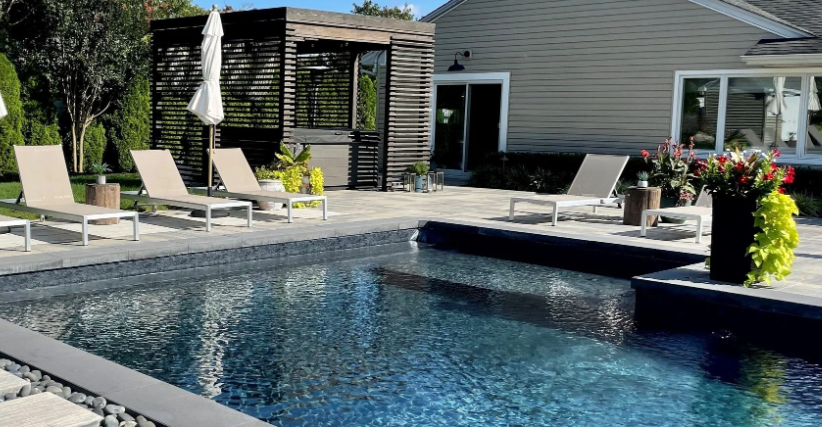
Pergolas over seating areas
Covered cabanas
Large umbrellas
Strategic tree placement (but not too close to the pool)
Plan for shade during the design phase. Adding it later is expensive and awkward.
Mistake 9: Forgetting About Utilities and Access
Where's your equipment going? How will you access it for maintenance?
I've seen pools where the equipment is crammed in a corner with no room to work. Or buried behind landscaping. Or so far from the pool that it requires 100 feet of plumbing.
Plan for Equipment Placement
Close enough to the pool to minimize plumbing runs
Accessible for maintenance and repairs
Screened or hidden so it doesn't ruin the aesthetic
Properly ventilated (equipment needs airflow)
Also think about:
Electrical access
Gas lines (if you have a gas heater)
Water source for filling the pool
Where you'll store cleaning equipment
These seem like small details, but they matter every single day you own the pool.
Mistake 10: Rushing the Design Process
You're excited. You want to start digging tomorrow.
I get it. But rushing the design phase leads to regrets.
Take Time to Get It Right
Live with the 3D rendering for a few days
Walk through your yard and visualize it
Think about how you'll actually use the space
Consider future additions (outdoor kitchen, fire pit, etc.)
Make sure the design fits your lifestyle
I've had clients change their minds three or four times during design. That's fine. Better to change it now than regret it for 30 years.
Once we break ground, changes are expensive. Get it right on paper first.
Mistake 11: Not Thinking About Long-Term Maintenance
A pool is a 30-year commitment.
Will you still want to deal with high-maintenance features in 10 years?
Design for Low Maintenance
Choose durable, easy-to-clean materials
Install automation so you're not manually operating everything
Use efficient, reliable equipment
Avoid features that require constant upkeep
I design every pool with longevity and ease of use in mind. Because I know you don't want a pool that becomes a burden.
Mistake 12: Hiring a Builder Who Doesn't Communicate
This might be the most frustrating mistake of all.
You text. No response. You call. Voicemail. You have a question. Crickets.
Red Flags
Takes days to return calls or texts
Vague answers to direct questions
Doesn't show up for scheduled meetings
No updates during construction
If communication is bad before you sign the contract, it'll be worse after they have your money.
What Good Communication Looks Like
Responses within a few hours (or same day at most)
Proactive updates on progress
Clear answers to questions
Transparency about delays or issues
I text clients the day before contractors arrive. I'm on-site regularly. I answer my phone.
Because building a pool is a big deal and you deserve to know what's happening.
How to Avoid These Mistakes
Do your homework:
Research builders. Read reviews. Ask for references.
Get everything in writing:
Detailed contracts. Itemized pricing. Clear timelines.
Ask questions:
If something doesn't make sense, ask. A good builder will explain.
Don't rush:
Take time to design it right. A few extra weeks in planning saves years of regret.
Trust your gut:
If something feels off, it probably is. Don't ignore red flags.
Ready to Build Your Pool the Right Way?
Building a pool is a big investment. You deserve a builder who does it right.
I'm Doug Johnson, owner of Patriot Pool Co in Longview, Texas. I spent 25 years as a mechanical engineer before getting into pool building, and I bring that precision and honesty to every project.
Transparent pricing. Quality materials. Clear communication. No shortcuts.
Let's build something you'll love for decades.
We serve families throughout East Texas including Longview, Tyler, Marshall, Kilgore, Lindale, Texarkana, and surrounding areas.
Doug Johnson
Owner, Patriot Pool Co
225 Towering Oaks Hvn, Longview TX 75602
Doug Johnson is the owner of Patriot Pool Co, helping homeowners across East Texas with pool construction, remodeling, maintenance, and repair services.
Request Your Free Consultation