How to Choose the Right Pool Design for Your Home in East Texas
You've decided to build a pool.
Now comes the fun part: designing it.
But also the overwhelming part. There are hundreds of design options, features, shapes, and finishes to choose from. Where do you even start?
Here's the truth: the "right" pool design isn't about following trends or copying what you saw on Pinterest. It's about creating something that fits your property, your family, and how you actually plan to use it.
Let me walk you through how to choose a pool design that you'll love for decades.
Start With How You'll Actually Use the Pool
Before you think about shape or features, ask yourself: what do we want to DO in this pool?
Different activities require different designs.
Swimming Laps
If you're a serious swimmer, you need:
Rectangular or L-shaped pool
Consistent depth (4-5 feet works well)
Length of at least 30-40 feet
Minimal obstacles (no tanning ledges in the swim lane)
Playing With Kids
Families with young kids benefit from:
Shallow areas (3-4 feet) for safe play
Tanning ledge or beach entry for toddlers
Steps with handrails
Gradual depth transition (not a sudden drop-off)
Entertaining and Parties
If you love hosting, consider:
Larger surface area for more swimmers
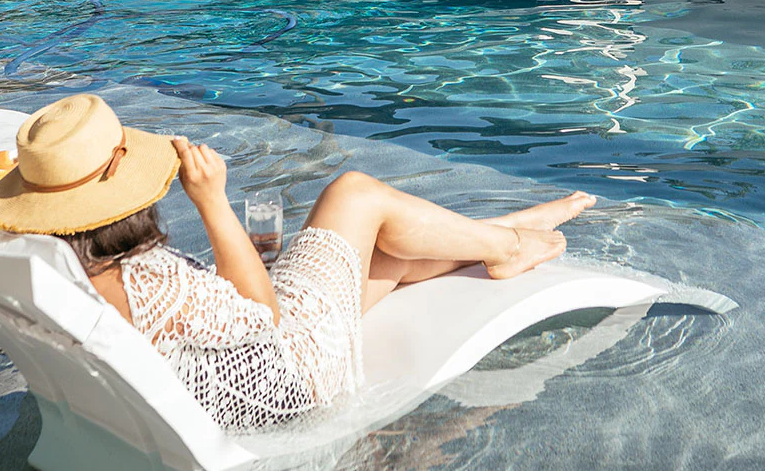
Tanning ledge with space for chairs
Swim-up bar area
Integrated spa for adults
Water features for ambiance
Relaxation and Lounging
If you want a peaceful retreat:
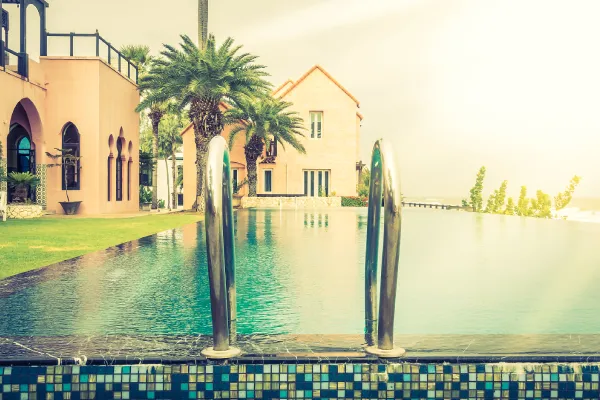
Spa or hot tub (raised infinity edge is amazing)
Tanning ledge for reading and relaxing
Water features for sound and ambiance
Seating areas in the pool
Exercise and Therapy
For fitness or physical therapy:
Consistent depth for water aerobics
Resistance jets for swimming in place
Steps and handrails for easy entry
Heated water for year-round use
Most families want a mix of these. That's fine. Just prioritize what matters most so the design reflects your actual lifestyle.
Consider Your Property and Lot
Your yard dictates what's possible.
Lot Size
Small Lots (Under 1/4 Acre):
Compact pool designs (300-400 sq ft)
Rectangular or geometric shapes (maximize space)
Vertical features (raised spa, waterfalls) add interest without taking up room
Medium Lots (1/4 to 1/2 Acre):
Standard family pools (400-600 sq ft)
More flexibility in shape
Room for outdoor living features
Large Lots (1/2 Acre+):
Go bigger if you want (600-800+ sq ft)
Freeform lagoon-style designs work well
Space for complete resort-style backyard
Yard Shape
Rectangular Yards:
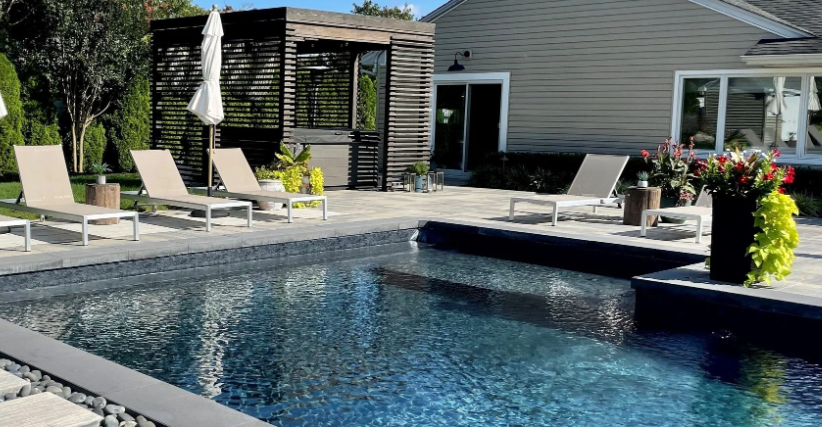
Geometric pools (rectangles, L-shapes) look natural and maximize usable space.
Irregular or Sloped Yards:
Freeform designs can work with the natural landscape. Raised spas and retaining walls handle slope beautifully.
Narrow Yards:
Long, narrow pools (lap pool style) fit well. Or position the pool lengthwise along the property.
Sun Exposure
Where does the sun hit your yard?
Full sun all day: Pool will heat naturally (good), but you'll need shade structures
Partial shade: Ideal. Warm water, comfortable lounging areas
Heavy shade: Might need a heater. Less algae growth (bonus)
Position the pool to take advantage of natural sun while planning shade for seating areas.
Existing Features
Work with what you have:
Trees: Beautiful for shade, but roots and leaves can be a problem. Plan accordingly.
Views: Orient the pool to take advantage of nice views.
Privacy: Use the pool placement to create privacy from neighbors.
Utilities: Avoid buried lines, septic systems, and easements.
Pool Shape: Freeform vs. Geometric
This is one of the first decisions you'll make.
Geometric Pools (Rectangles, L-Shapes, Squares)
Pros:
Clean, modern look
Maximizes swimming space
Easier to cover
Works well with contemporary homes
Timeless design
Cons:
Can feel formal or institutional if not designed well
Less natural-looking
Best for:
Modern or traditional homes
Lap swimming
Smaller lots where space efficiency matters
Homeowners who prefer clean lines
Freeform Pools (Organic, Curved Shapes)
Pros:
Natural, resort-like appearance
Blends into landscaping
Feels more relaxed and inviting
Great for incorporating rock features and waterfalls
Cons:
Takes up more space for the same swimming area
Can be harder to cover
More complex (and expensive) to build
Best for:
Larger lots with natural landscaping
Families who want a backyard oasis vibe
Properties with trees and organic features
Homeowners who prefer a softer, less formal look
Hybrid Designs
You don't have to choose one or the other. Many of my favorite pools combine geometric and freeform elements.
Example: A rectangular main pool with a curved spa and natural rock waterfall. Clean where it matters, organic where it adds beauty.
Depth: How Deep Should Your Pool Be?
Deeper isn't always better.
Standard Depth Options
Shallow End (3-4 feet):
Safe for kids, comfortable for standing and playing. Most pools start here.
Mid Depth (4-5 feet):
The sweet spot for most activities. Deep enough to swim, shallow enough to stand.
Deep End (6-8 feet):
Needed for diving. But if nobody dives, you're just heating and cleaning extra water you don't use.
What Most Families Choose
A gradual slope from 3.5 feet to 5.5 feet covers most needs. You can swim, play, and stand comfortably.
If you want a diving board or slide, you'll need 8+ feet in that area (check local codes).
Sports Pools
If you want to play volleyball, basketball, or other pool games, keep depth consistent at 4-5 feet. Nobody wants to tread water while trying to hit a volleyball.
Features to Consider
Now for the fun stuff.
Tanning Ledges (Baja Shelves)
A shallow shelf (6-12 inches deep) where you can place lounge chairs or let kids play.
Why I recommend them:
Incredibly popular with families
Multi-functional (lounging, kids' play area, pet entry)
Adds visual interest
Spas and Hot Tubs
Spas extend your pool's usability into cooler months.
Options:
Attached spa: Shares equipment with the pool, spillover into the pool
Raised infinity spa: Elevated with water cascading over the edge (stunning)
Separate hot tub: Independent system, can be used without running pool equipment
I build a lot of raised infinity spas. They're the feature clients rave about most.
Water Features
Waterfalls:
Natural rock or modern sheer descent. Adds sound and movement.
Deck Jets:
Arcing streams of water that shoot into the pool. Kids love them.
Bubblers:
Fountain-like features in tanning ledges or shallow areas.
Scuppers:
Water spouts from walls or raised features.
Water features aren't just decorative. They aerate the water and create ambiance.
Fire Features
Fire Bowls:
Often placed on spa walls. Flames dancing over water at night is dramatic.
Fire Pits:
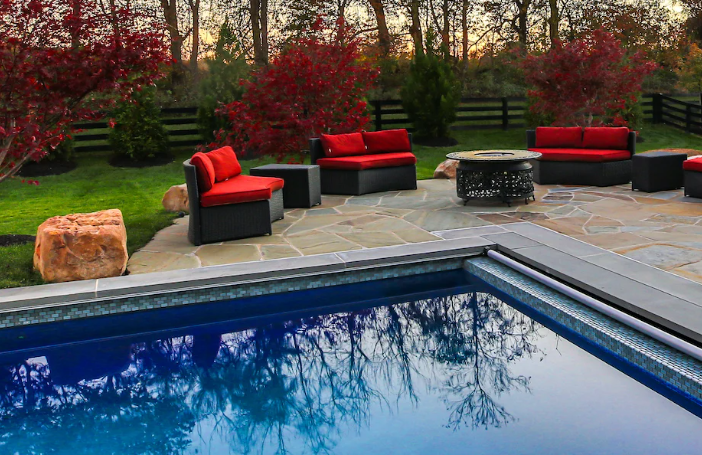
Separate from the pool but nearby. Extends outdoor living into cooler months.
Fire and water together create an incredible atmosphere.
Beach Entries (Zero-Entry)
A gradual slope into the pool, like walking into the ocean.
Pros:
Beautiful, resort-like look
Accessible for everyone
Safe for young kids and elderly
Cons:
Takes up significant space
More expensive to build
Great if you have the room. Not ideal for small lots.
Slides
Kids love them. Adults use them more than they admit.
Options:
Built-in rock slides (integrated into waterfall features)
Standalone slides (removable)
Slides require deeper water (usually 5+ feet) in the landing area.
Lighting
Don't overlook this. Lighting transforms your pool at night.
LED Pool Lights:
Energy-efficient, color-changing, controllable from your phone. Standard on most modern pools.
Accent Lighting:
Uplights on waterfalls, fire features, and landscaping.
Deck Lighting:
Path lights and step lights for safety and ambiance.
A well-lit pool is usable (and beautiful) long after sunset.
Finishes: What You See and Touch
The interior finish affects both appearance and durability.
Plaster Options
Standard White Plaster:
Classic look
Most affordable
Lasts 10-15 years
Shows stains more easily
Colored Plaster:
Blues, grays, blacks for different water colors
Same durability as white
Slight upcharge
Pebble Finishes:
Natural stone aggregates
Highly durable (15-20+ years)
Textured surface
Hides stains better
Premium look and feel
Quartz Finishes:
Smooth with quartz aggregates
Very durable
Wide color range
Resists staining and algae
I recommend pebble or quartz for longevity and appearance. They cost more upfront but last significantly longer.
Tile
Waterline tile protects the plaster and adds a decorative accent.
Options:
Porcelain (durable, affordable)
Glass (premium look, vibrant colors)
Natural stone (travertine, slate)
Choose something that complements your home and decking.
Coping
Coping is the edge cap around the pool.
Popular Choices:
Travertine (stays cool, looks great)
Precast concrete (affordable, many styles)
Natural stone (flagstone, bluestone)
I use travertine on most pools because it performs well in Texas heat and looks beautiful.
Decking: What Surrounds the Pool
Your deck is where you walk, lounge, and entertain.
Decking Materials
Poured Concrete:
Most common
Affordable
Can be colored, stamped, or textured
Durable
Travertine Pavers:
Premium look
Stays cool underfoot (important in Texas)
Natural variation in color
Long-lasting
Flagstone:
Natural, rustic appearance
Can be slippery when wet
Requires sealing
Brick or Pavers:
Classic look
Many patterns available
Easy to replace individual pieces
How Much Decking?
Plan for at least 4-5 feet of decking around the pool. More if you want space for furniture, dining, or entertaining.
Skimping on decking makes the pool feel cramped.
Automation and Smart Features
Modern pools can be controlled entirely from your phone.
What Automation Controls:
Pump speed and run times
Heating and cooling
Lighting (color, scenes, schedules)
Water features
Cleaning cycles
Set your spa to heat to 100 degrees by 6 PM. Turn on the lights from your couch. Start the waterfall for a party.
It's convenient, efficient, and just cool.
I include automation on almost every pool now. It's worth it.
Budget Considerations
Let's talk money.
Where to Invest
Prioritize:
Quality construction (structure, plumbing, equipment)
Proper sizing and engineering
Durable finishes
Automation
These affect how the pool performs and lasts.
Where You Can Save
Consider:
Starting with basic tile and upgrading later
Adding features (outdoor kitchen, fire pit) in phases
Choosing standard plaster now, resurfacing with pebble in 10 years
A well-built basic pool is better than a fancy pool built poorly.
Design Process: How We Do It
Here's how I help clients design their perfect pool:
1. Consultation
We talk about your vision, needs, and budget. I assess your property.
2. Custom 3D Design
I create a rendering showing exactly what the pool will look like in your yard.
3. Refinement
We adjust the design until it's perfect. Shape, features, materials, everything.
4. Detailed Proposal
Itemized pricing so you know exactly what everything costs.
5. Build
Once you approve, we bring the design to life.
The design phase usually takes 1-2 weeks. We don't rush it. Getting it right on paper saves headaches later.
Questions to Ask Yourself
Before finalizing your design, consider:
Will this pool still work for us in 10 years?
Does it fit our property without overwhelming it?
Is it designed for how we'll actually use it?
Are we choosing durable materials?
Does the investment make sense for our budget?
If you can answer yes to all of these, you're on the right track.
Ready to Design Your Perfect Pool?
The right pool design is personal. It fits your family, your property, and your lifestyle.
I'm Doug Johnson, owner of Patriot Pool Co in Longview, Texas. I've spent 25 years as a mechanical engineer, and I bring that precision to every pool design.
Let's create something you'll love for decades.
We serve families throughout East Texas including Longview, Tyler, Marshall, Kilgore, Lindale, Texarkana, and surrounding areas.
Doug Johnson
Owner, Patriot Pool Co
225 Towering Oaks Hvn, Longview TX 75602
Doug Johnson is the owner of Patriot Pool Co, helping homeowners across East Texas with pool construction, remodeling, maintenance, and repair services.
Request Your Free Consultation