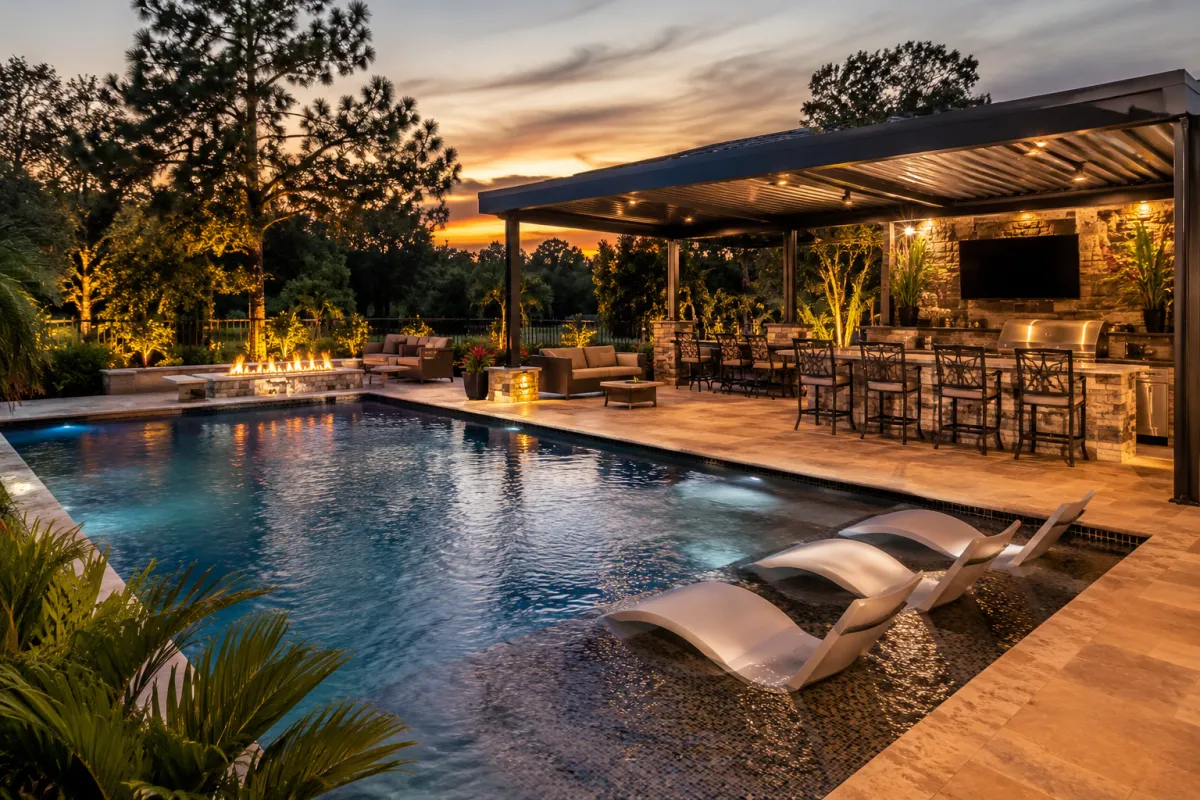
What Outdoor Living Features Go Best With a Pool? (East Texas Homeowner's Guide)
I get this question almost every week.
A homeowner calls me to talk about a pool, and about ten minutes in, they start asking about everything else. The kitchen. The pergola. The fire pit. The lighting. Pretty soon we're talking about building an entire outdoor living space, not just a hole in the ground with water in it.
That's exactly how it should work.
After 25 years as a mechanical engineer and several years building custom gunite pools here in Longview and across East Texas, I've learned that a pool is always better when it's part of something bigger. The features you build around that pool are what turn it from a nice amenity into a backyard you actually live in.
This guide is going to walk you through every major outdoor living feature worth considering, how they work together, and how to plan them the right way from the start. Whether you're in Longview, Tyler, Marshall, Kilgore, or anywhere else in East Texas, the planning process is the same - and getting it right up front saves you a lot of money and headaches later.
Let's get into it.
Why Outdoor Living Features Matter More in East Texas
Here's the honest truth about building a pool in East Texas: the weather runs this conversation.
We're in climate zones 8a and 8b. Our summers are brutal. Average highs sit around 89 degrees Fahrenheit, but days over 100 - even 104 - are not unusual. The humidity makes it feel worse. We get about 49 inches of rain a year, which means we also deal with drainage issues that most other parts of the country don't think about.
The upside? Our pool season runs from April through October, sometimes longer. If you add the right features - especially fire elements - you can realistically use your outdoor space 8 to 9 months out of the year.
That's not a luxury. In East Texas, a pool and outdoor living space is how people actually spend time at home.
Shade Isn't Optional Here
I'll say this plainly: if you build a pool in East Texas without planning for shade, you've wasted your money. Nobody sits out in 100-degree heat without somewhere to escape to. Shade structures aren't an add-on here - they're as essential as the pool itself.
Materials Have to Work Harder
The UV exposure in East Texas is intense. Temperature swings between seasons - and even between morning and afternoon - put serious stress on materials. Whatever you build out here needs to be rated for it. I'll call out the right materials as we go through each section.
Outdoor Kitchens: The Heart of Pool Entertaining
If you're going to invest in one outdoor living feature alongside your pool, make it a kitchen.
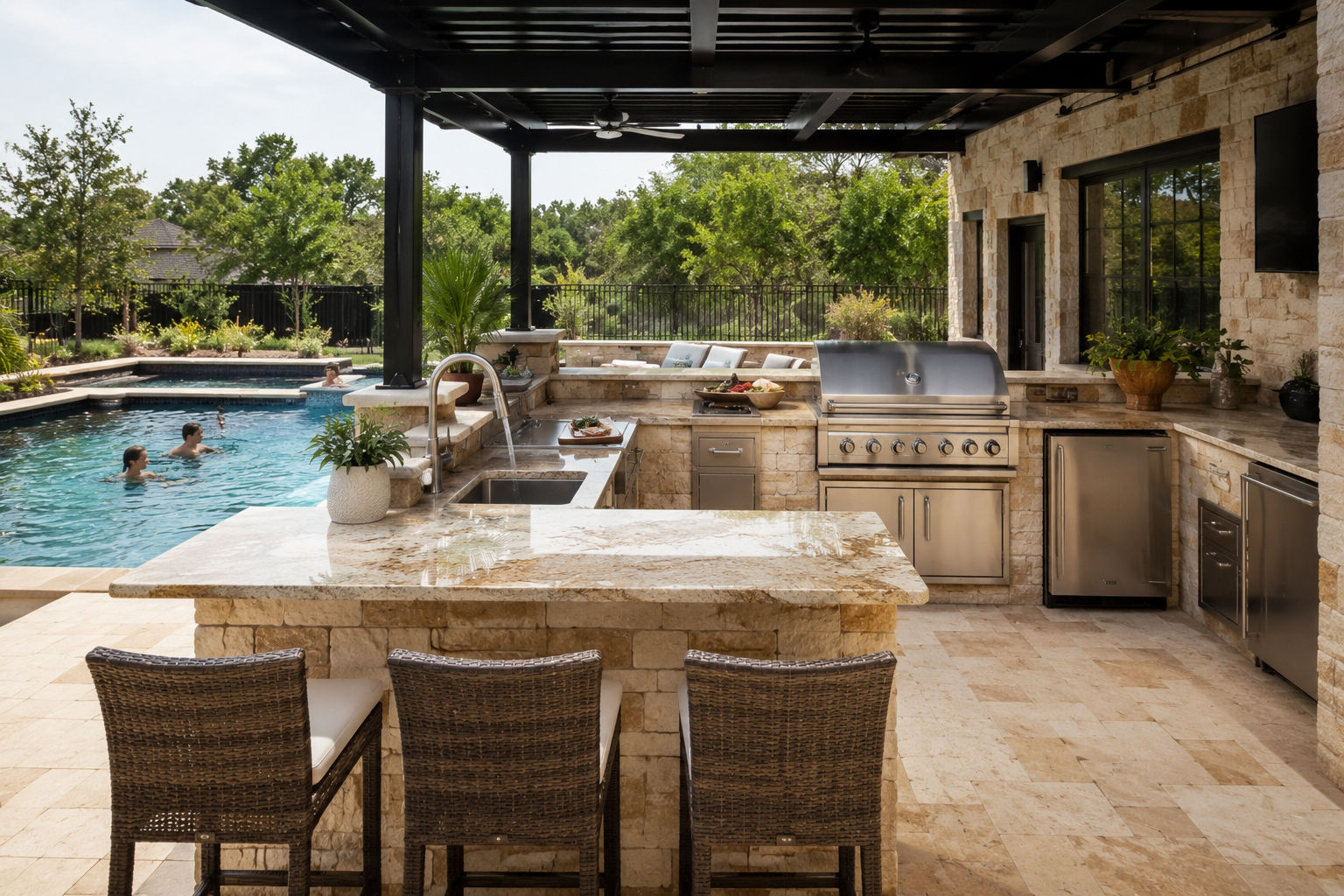
Think about what happens at every pool party. Everyone gravitates toward the food. The person grilling gets stuck inside, sweating in the kitchen while everyone else is out back. An outdoor kitchen solves that problem completely. The cook stays in the party, the heat stays outside, and your actual house doesn't turn into a sauna.
In East Texas summers, keeping cooking heat out of the house is a practical decision, not just a lifestyle choice.
What Goes in an Outdoor Kitchen
A solid outdoor kitchen starts with a built-in grill. From there, you build out based on how you actually entertain:
Built-in refrigerators and drink coolers
Sinks with running water
Ample counter space and storage cabinets
Bar seating so guests can sit with you while you cook
Pizza ovens and smokers (these are gaining serious popularity in East Texas)
Weatherproof cabinetry designed for humidity and temperature swings
The bar seating piece matters more than people realize. Counter seating right next to the grill turns the cooking area into a natural gathering spot. It becomes the anchor of the whole outdoor space.
Why Pool Build Timing Is Critical for Outdoor Kitchens
Here's where my engineering background makes a real difference. When we're planning your pool, I coordinate with outdoor kitchen contractors early. During excavation, we can run gas lines and plumbing at the same time. That's a fraction of the cost compared to trenching and running those lines after everything is already built.
If you know you want an outdoor kitchen - even if you're not building it right away - tell me during our design consultation. I'll design the pool layout and deck to complement exactly where that kitchen is going, and we'll rough in the utilities during the pool build. You'll thank yourself later.
💡 Pro Tip from Doug: Plan your outdoor kitchen location before we pour your pool deck. Moving gas lines and water lines after a concrete deck is in place is expensive and disruptive. Get the rough-in work done during excavation and you'll save real money.
Pergolas and Covered Structures: Essential Shade Solutions
I've already said shade isn't optional in East Texas. So let's talk about the best ways to get it.
Pergolas and covered structures range from simple to elaborate. The right choice depends on your budget, your aesthetic, and how much protection you actually want.
Types of Covered Structures
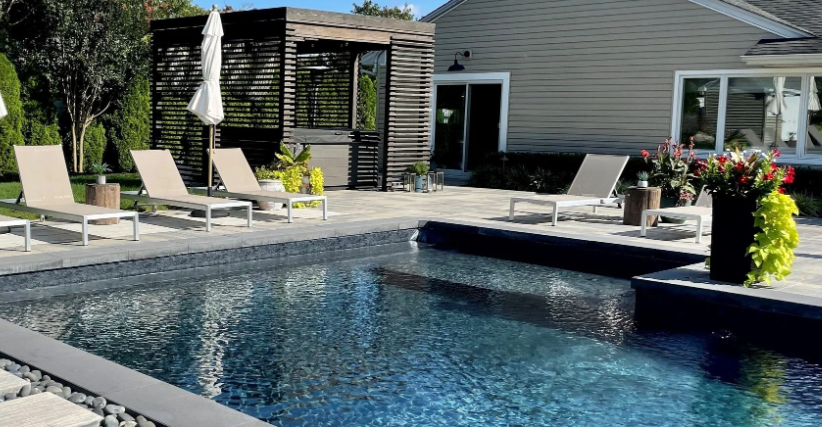
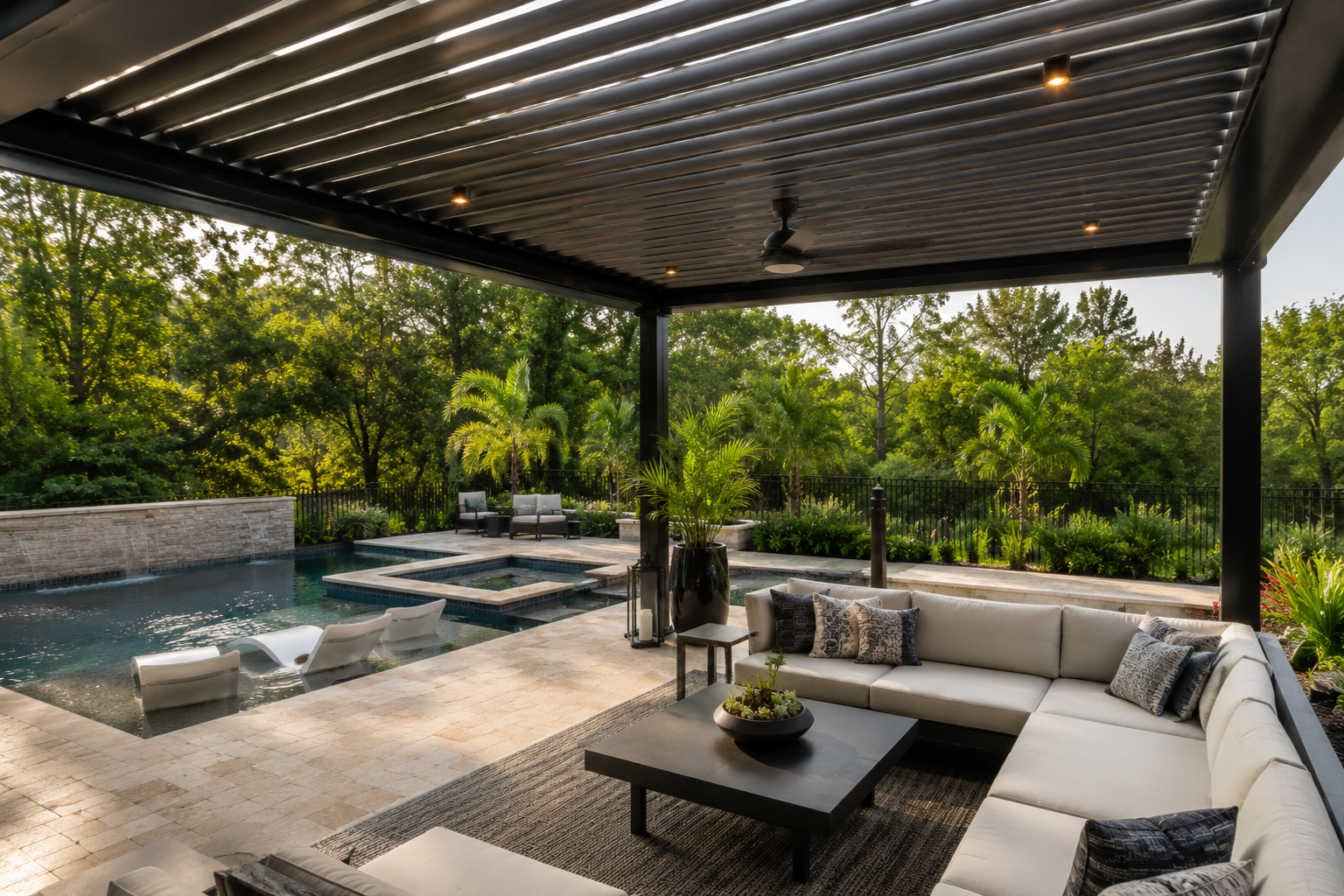
Pergolas with louvered roofs are probably the most popular right now. They're motorized - you open them for sun, close them when it rains, or angle the louvers for filtered shade. They're a practical choice for East Texas because they work year-round.
Full cabanas go further. Think ceiling fans, recessed lighting, outdoor curtains, mounted TVs, and full outdoor lounge furniture underneath. These turn a section of your backyard into a fully livable outdoor room.
Shade sails are a modern option with a clean architectural look. Tension fabric structures stretched between anchor points. They provide great UV protection and move some air. Good for covering a large area without the structure of a full pergola.
Traditional pergolas with retractable canopies are a solid middle ground. The structure is permanent, but the canopy fabric can be retracted on nice days.
Integrating Pergola Footings with Your Pool Deck
Here's something most homeowners don't know: if we're pouring your pool deck and you know a pergola is going in, we can integrate the footing anchors directly into the concrete pour. That's cleaner structurally and more cost-effective than drilling into an existing slab later.
I bring this up with every client during the design phase. It's a small coordination item that makes a big difference in the finished product.
⚠️ Common Mistake to Avoid: Don't buy a pergola kit from a big box store and assume it'll work in East Texas wind and weather. Structures out here need proper anchoring. East Texas gets strong storms, and a lightweight pergola that isn't properly anchored is a liability. Work with contractors who understand local conditions.
Fire Features: Extend Your Pool Season Year-Round
East Texas winters are mild compared to most of the country, but we do get cold snaps. Temperatures can drop into the 30s and occasionally below freezing. Fire features are what let you use your outdoor space through those cooler months.
Add a fire feature and suddenly your outdoor living space is usable from late March through November - sometimes longer. That's real return on investment.
Types of Fire Features
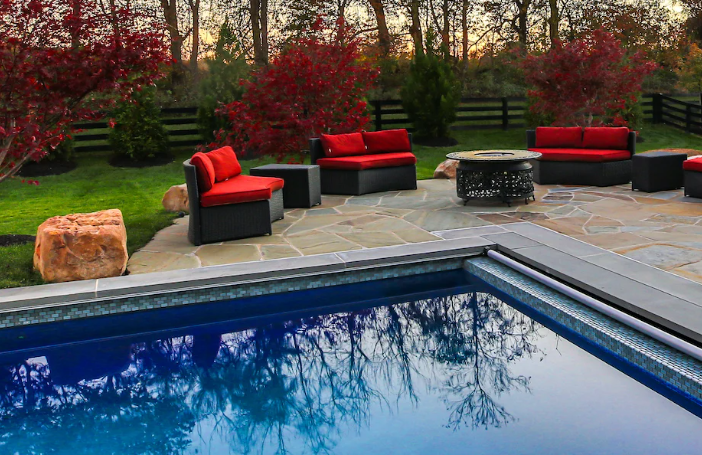
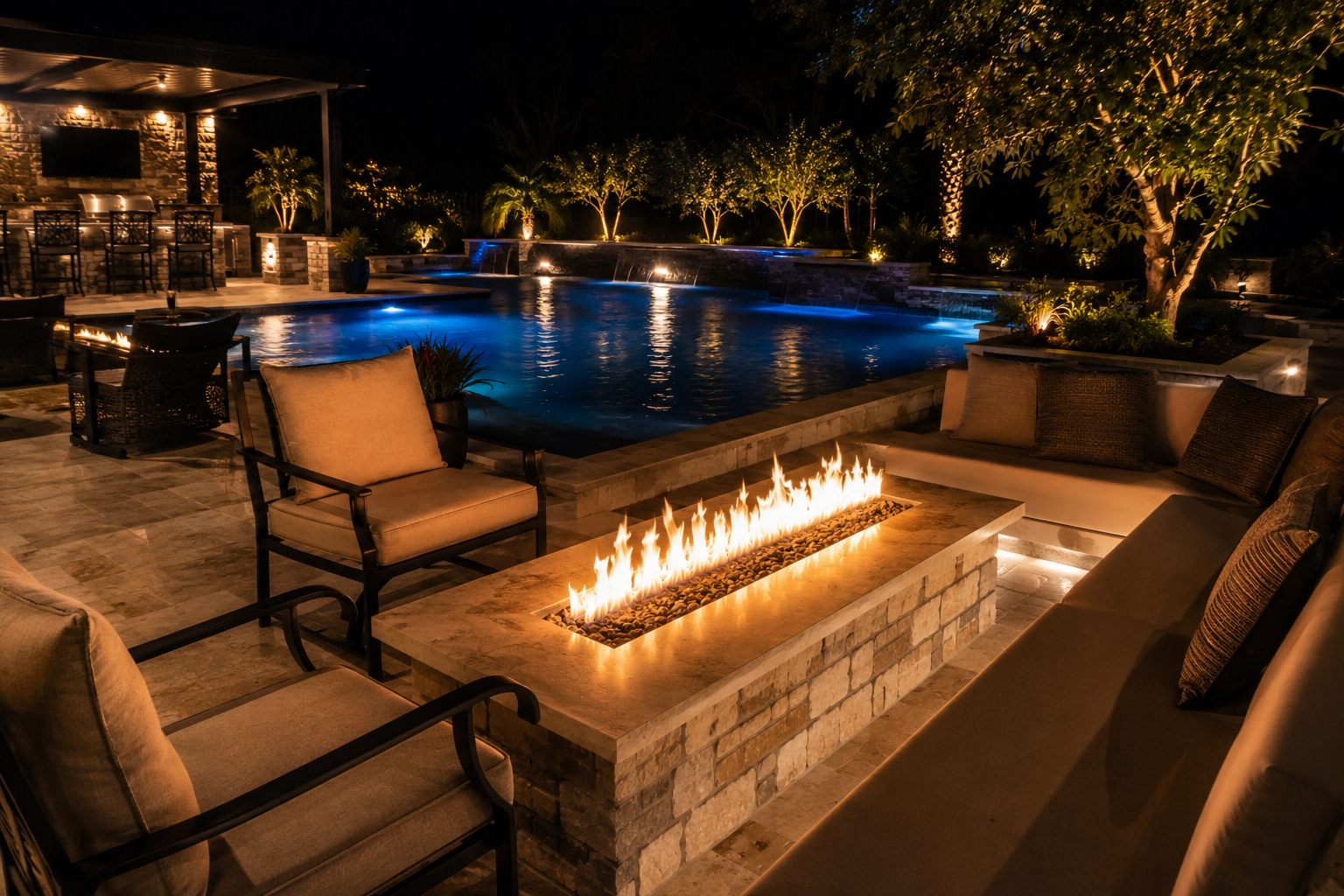
Fire pits come in round, square, and linear styles. They create a natural gathering spot separate from the pool. Plan for at least 10-15 feet of clearance from the pool water - that's a baseline safety and code requirement in most East Texas jurisdictions.
Fire bowls mounted on spa edges or pool coping are a different look entirely. They're more dramatic and integrated into the pool itself. When someone approaches your backyard at night and sees fire reflecting off the water, it makes an impression.
Outdoor fireplaces are the most elaborate option. Gas or wood-burning, they anchor a seating area and create something that feels more like an outdoor living room than a backyard. They're a bigger investment but they completely transform how a space feels.
Gas Lines During Pool Construction
I run gas lines during pool construction for clients who know they want fire features - or who think they might want them eventually. The cost of running a gas line during excavation is a fraction of what it costs to do it after the deck is poured and the landscaping is in.
I also engineer the placement carefully. Fire features need proper clearance from the pool, from overhead structures, and from seating areas. That's not just aesthetics - it's safety. Getting this right in the design phase is exactly the kind of detail my engineering background helps with.
📌 Key Takeaway: Fire features do double duty. They extend your season into cooler months AND create the most dramatic nighttime ambiance in any outdoor space. Budget for at least one fire element from the beginning - you'll use it more than you expect.
Lighting: Make Your Pool Usable After Dark
The right lighting turns your pool and outdoor space from a daytime feature into an all-hours living space.
This is an area where planning matters more than people realize. Running electrical conduit after everything is built is expensive. If we think about lighting placement during pool construction, we can rough in conduit for future fixtures at minimal cost. That gives you options later without tearing anything up.
Pool Lighting
LED pool lights are standard now, and they should be. They're energy-efficient and they last significantly longer than older halogen fixtures. Color-changing LED systems let you set different moods - bright white for swimming, blue or purple for evening entertaining.
I include LED pool lighting as standard on every build. This is not a place to cut corners. A lit pool at night is a completely different experience than a dark one.
Landscape and Accent Lighting
Beyond the pool itself, there are several layers of outdoor lighting worth planning:
Path and step lighting is about safety first. Pool decks have elevation changes, steps, and edges. Proper step lighting prevents accidents and is code-required in many areas.
Accent uplighting for trees, walls, and architectural features creates depth and visual interest in the landscape. Done well, it makes your whole yard look like a resort.
String lights and bistro lighting under a pergola or along a fence line add warmth and ambiance. They're simple but effective.
Integrated landscape lighting ties the whole space together - pool, kitchen, pergola, fire features, and plantings all lit cohesively.
The Conduit Strategy
When we pour your pool deck, I run conduit to likely future lighting locations. Even if you're not ready to install landscape lighting now, having the conduit in place means you just pull wire later instead of trenching through your finished yard. It's a small thing during construction that saves significant money later.
Water Features That Add Movement and Sound
One of the things that separates a great pool from an ordinary one is water movement. Still water looks flat. Moving water has life to it - and sound.
The good news: as a custom gunite builder, I design water features directly into the pool shell. They're not afterthoughts bolted on later. They're engineered into the structure from the beginning.
Popular Water Features
Sheer descents are flat, glass-like sheets of water that fall from a raised ledge or wall into the pool below. They look clean and modern. The sound is calming without being overwhelming.
Deck jets arc water from the deck into the pool. They're adjustable, they look great at night when illuminated, and kids absolutely love them.
Waterfalls range from natural-looking rock formations to clean architectural scuppers. Natural rock waterfalls fit more traditional or tropical landscapes. Modern scuppers work better with contemporary designs.
Bubblers on tanning ledges are exactly what they sound like - gentle bubbles that come up through the shallow water on a tanning ledge. They're a nice touch that makes the tanning ledge more interactive, especially for kids.
Spillover spas are the most popular water feature I build. The spa sits elevated above the pool, and water cascades over the edge into the pool. You get the sound, the visual movement, and the practical benefit of a heated spa separate from the main pool.
💡 Pro Tip from Doug: If you're thinking about a spillover spa, plan for it from day one. The plumbing and engineering for a spa that properly feeds into the pool needs to be part of the original design. Adding it after the fact means tearing things up. Do it right from the start.
Seating and Lounge Areas: Create Outdoor Rooms
The best outdoor spaces don't feel like a yard with a pool in it. They feel like a series of connected rooms - each with a purpose, each comfortable, each designed for a specific activity.
The key to getting this right is thinking about zones during the design phase, before anything is built.
Defining Your Outdoor Zones
A well-designed pool area typically has several distinct zones:
The active pool zone - This is around the pool itself. Space for getting in and out, pool deck furniture, and open sightlines for watching kids.
The lounge zone - Comfortable seating away from the water. Outdoor sofas, sectionals, and coffee tables. Under a pergola if possible. This is where adults sit when they're done swimming.
The dining zone - Table and chairs for eating. Close to the outdoor kitchen if you have one. Covered if possible.
The entertainment zone - Outdoor TV, sound system, and seating arranged around them. This often overlaps with the lounge zone.
The fire feature zone - Seating arranged around a fire pit or fireplace. Separate from but connected to the pool area.
Built-in Seating Options
As a gunite builder, I can incorporate permanent seating directly into the pool shell and deck structure. Built-in benches along a raised wall, in-pool seating on tanning ledges, and integrated steps that double as lounge spots are all options we can design from scratch.
These permanent elements set the foundation. You layer in furniture on top of them.
Furniture Matters More Than People Think
Cheap outdoor furniture doesn't survive East Texas. The UV exposure destroys cheap plastic. Salt water from saltwater pools degrades low-quality materials fast. Humidity causes rust in metal frames that aren't rated for it.
I tell every client: buy quality outdoor furniture with marine-grade fabric, powder-coated or aluminum frames, and UV-resistant finishes. You'll spend more upfront, but you won't be replacing it every two years.
When I show clients their 3D renderings during the design phase, I include furniture placement. I want you to see exactly how the finished space lives - not just the pool, but the whole environment around it.
📌 Key Takeaway: Design for your outdoor zones first, then select furniture. If you plan furniture after everything is built, you'll often find the deck is the wrong shape, the pergola is in the wrong spot, and nothing flows the way you imagined. Start with the zone plan, then build everything around it.
Landscaping and Hardscaping: The Frame Around the Picture
The pool and all the features we've discussed are the main event. But landscaping and hardscaping are what make everything look intentional and finished.
This is also where East Texas soil becomes a real engineering consideration.
East Texas Soil Challenges
Our soil here is heavy clay. It expands when it gets wet and contracts when it dries out. That movement causes problems for anything that isn't properly engineered. Retaining walls crack. Pavers shift. Drainage fails.
When I design a pool build, I think about grading and drainage from the start. Where does the water go when it rains 49 inches a year? How do we keep water away from the pool equipment and the house foundation? These aren't afterthoughts - they're part of the engineering process.
Pool Deck Materials
The deck material around your pool matters more in East Texas than in most places. Here's how the main options stack up:
Travertine pavers stay significantly cooler underfoot than concrete in full sun. That matters at 100 degrees. Travertine also has natural slip resistance and looks beautiful. It's my top recommendation for pool decks in East Texas.
Natural stone pavers are another solid choice. Durable, attractive, and if sealed properly they hold up well to UV and temperature swings.
Stamped concrete gives you a lot of design flexibility and can mimic the look of stone or pavers. It needs proper sealing and re-sealing to hold up in East Texas conditions.
Standard broom-finished concrete is functional but it gets hot and it's hard on bare feet in summer. I'd rather see clients invest a little more in pavers than go this route.
Retaining Walls and Raised Planters
Many East Texas backyards have grade changes. Retaining walls that handle those changes serve double duty - they manage the soil and they create visual structure in the landscape. Raised planters bring greenery up to eye level and make the space feel more complete.
I coordinate with landscaping contractors to make sure retaining wall footings are properly tied in and that drainage is accounted for throughout.
Plantings That Survive East Texas
A few notes on plants near pools in our climate:
Choose plants that don't shed a lot of debris into the pool
Native East Texas plants handle our humidity and heat better than exotic species that look great at the nursery and die by August
Tropical plants like elephant ears, cannas, and ornamental grasses add that resort feel and thrive here
Artificial turf has gotten dramatically better in recent years and is worth considering for low-traffic areas around the pool - no mowing, no mud, stays green
How to Plan Your Outdoor Living Features the Right Way
This section is the most important one in this entire blog.
Every pool project I've seen go sideways - budget overruns, features that don't work together, things that had to be torn out and redone - came from one of two problems: features that weren't planned together from the start, or too many contractors who weren't talking to each other.
Start With the Whole Vision
Before you call anyone, sit down and think about how you want to actually use the space. Write it down.
How often do you entertain large groups vs. small gatherings?
Do you want a space that's primarily for adults or are kids the main users?
Do you cook outdoors regularly, or is that an occasional thing?
How important is nighttime use to you?
Do you want the space to feel like a resort, a family gathering spot, or something more intimate?
Your answers drive every decision that follows.
Sequence Matters
Here's the order I recommend planning outdoor living features:
Pool design first - The pool is the anchor of everything else. Its size, shape, and placement determine what's possible around it.
Shade structures second - Where the pergola or cabana goes determines where the lounge zone sits, which affects traffic flow.
Outdoor kitchen third - Location drives utility rough-in work, which needs to happen during pool excavation.
Fire features fourth - Safety clearances and gas line routing are part of the design, not an add-on.
Lighting and electrical fifth - Conduit runs happen during construction; fixture selection can come later.
Landscaping last - Landscaping ties everything together but works around what's already built.
How I Coordinate the Process
I only take 6-7 projects at a time. That's intentional. It means I can actually be present on your job, answer your calls, and coordinate with the other contractors involved in your outdoor build.
That coordination piece matters. A pool contractor who's too busy to call you back is also too busy to make sure your pergola contractor shows up at the right time, or that your electrician knows where the conduit needs to run.
When you work with Patriot Pool, I'm your point of contact throughout the whole process. You get my direct number. I answer texts. I don't ghost clients.
⚠️ Common Mistake to Avoid: Hiring a pool contractor, then separately hiring an outdoor kitchen contractor, then a landscaper - all independently, all on different timelines. The result is features that don't quite line up, utilities that cost twice as much to run, and a finished space that looks patched together. Plan holistically, build in sequence.
Frequently Asked Questions About Pool Outdoor Living
What's the most important outdoor living feature to add first?
In East Texas, shade. Every time.
You cannot use a pool comfortably in June, July, August, or September without somewhere to escape the direct sun. A pergola, cabana, or shade sail over your lounge area isn't optional here - it's what makes the whole space usable. Build the pool and the shade structure together if you can.
Do I need to plan outdoor living features before building the pool?
Yes - at least in broad strokes. You don't need to have every detail figured out, but you need to know where the kitchen is going, where the pergola is going, and whether you want fire features. That information drives decisions during excavation and deck pour that are very expensive to undo later.
Even if you're not building the outdoor kitchen this year, knowing you want one eventually means I rough in the gas and water lines during the pool build. That planning costs almost nothing now and saves a lot later.
What outdoor features add the most value to a home?
From what I see in East Texas real estate conversations, outdoor kitchens and covered lounge areas consistently add the most perceived value to a home with a pool. A complete outdoor living setup - pool plus kitchen plus pergola plus fire feature - turns the backyard into a primary living space, and buyers respond to that.
Lighting is close behind. A beautifully lit pool and outdoor space shows extremely well.
How do fire features work safely near pools?
The basics: most local codes require at least 10-15 feet of clearance between a fire feature and the pool water. Overhead clearance from structures matters too. Gas-fueled fire features should be installed by licensed gas contractors.
I engineer fire feature placement as part of the pool design. Clearances, sight lines, prevailing wind direction - these all factor in. I also run the gas lines during pool construction so the infrastructure is ready when the fire feature contractor shows up.
What's the best decking material for Texas heat?
Travertine pavers. Hands down.
Travertine stays cooler underfoot than concrete, it's naturally slip-resistant, and it looks great for decades with proper care. In a climate where your barefoot kids are running from the pool to the deck and back, you want something that doesn't burn their feet at 2pm in July.
If travertine is outside the budget, quality concrete pavers are a solid second choice. Standard broom-finished concrete is my last recommendation - it gets too hot and it's rough on bare feet.
How do you handle contractor coordination for a full outdoor living project?
I'm clear with clients upfront: I build pools. I don't build pergolas or outdoor kitchens. But I've worked with good contractors in the East Texas area and I can help you find people who do quality work and who understand how to coordinate with a pool build.
The key is timing and communication. I'll tell your pergola contractor when the deck pour is happening so footings can be integrated. I'll coordinate with your electrician on conduit placement. I'll make sure the gas rough-in is done before the kitchen contractor needs it.
That kind of coordination is what keeps a project from turning into a series of disconnected jobs that don't work together.
What should I ask a pool builder before signing a contract?
A few questions I'd encourage every East Texas homeowner to ask any pool builder:
How many projects are you running at one time? (If it's 20+, you won't get much attention)
Do you provide itemized pricing? (Hidden fees are common in this industry)
Who handles coordination with other contractors?
What's your experience with East Texas clay soil and drainage?
Can I see examples of completed projects with full outdoor living builds?
What's a realistic timeline? (Anyone who promises 4 weeks on a custom gunite pool isn't being straight with you)
I ask my clients to hold me to these same questions. The answers tell you a lot about who you're dealing with.
Can I add outdoor living features to an existing pool?
Yes, but it's more complicated and expensive than planning everything together from the start.
Adding an outdoor kitchen means trenching through existing landscaping to run gas and water lines. Adding a pergola means drilling anchor bolts into an existing deck. Adding fire features means running new gas lines and potentially reworking drainage.
None of it is impossible, but all of it costs more and disrupts your existing space. If you're building a new pool, plan the whole outdoor living vision now - even if you phase the actual construction over a year or two.
Putting It All Together
A pool by itself is a nice thing. A pool with the right outdoor living features built around it is where you actually live.
In East Texas, we have the climate to use an outdoor space 8 to 9 months a year. The summer heat means shade and outdoor cooking aren't optional - they're practical. The mild shoulder seasons mean fire features earn their keep. The long evenings in spring and fall mean lighting matters.
The homeowners I build for in Longview, Tyler, Marshall, Kilgore, Lindale, and Texarkana aren't building pools as a luxury item. They're building them because East Texas life happens outside. The right pool and outdoor living combination is an extension of your home.
Planning it right means thinking about all of it together from day one. Pool, shade, kitchen, fire, lighting, seating, landscaping - these aren't separate decisions. They're one decision about how you want to live.
My job is to build you the best gunite pool in East Texas. The engineering precision I bring from 25 years in mechanical engineering means your pool is structurally right, your utilities are routed correctly, and your outdoor space is planned to work as a cohesive whole.
That's what we do at Patriot Pool Co.
Doug Johnson
Patriot Pool Co.
Longview, Texas
Ready to start planning your pool and outdoor living space?