Pools with Tanning Ledges in East Texas
Pools with Tanning Ledges: What Every East Texas Homeowner Should Know Before They Build
I build pools with tanning ledges almost every month now. A few years back, they were a "nice bonus." Today, they're the feature folks in Longview, Tyler, Marshall, Kilgore, and all over East Texas ask me about first.
I've added a tanning ledge to about 80% of the pools I've built in the last several years. That tells you something.
I'm Doug Johnson, owner of Patriot Pool Co. here in Longview.
Before I started building custom gunite pools, I spent 25 years as a mechanical engineer. So I look at every pool like a big, fun engineering project that you and your family get to enjoy for decades. I've built pools across East Texas clay soil, from Longview to Marshall, and I've seen what works in our heat and humidity - and what doesn't last a summer.
Out here, our summers are no joke. Average highs around 89°F, plenty of days that jump past 104°F, and about 49 inches of rain a year. Humid. Sticky. Sun that will cook cheap materials in no time.
That's exactly why tanning ledges have become such a smart investment for East Texas families. They turn your pool into a resort-style hangout, give kids and grandparents a safe, shallow spot, and let you enjoy the water even when you don't feel like swimming laps.
Let me walk you through how they work, what to think about, and how I design them so they hold up in our clay-heavy soil and wild weather swings.
Table of Contents
What Is a Tanning Ledge (and Why Almost Every Family Wants One)
Choosing the Right Depth for Your East Texas Pool
Design Features Worth Adding to Your Tanning Ledge
Who Gets the Most Out of a Tanning Ledge (Spoiler: Almost Everyone)
Tanning Ledge Furniture - What Actually Works in East Texas Heat
Engineering a Tanning Ledge in East Texas Clay Soil
Common Concerns I Hear (and Honest Answers)
Frequently Asked Questions
What Is a Tanning Ledge (and Why Almost Every Family Wants One)
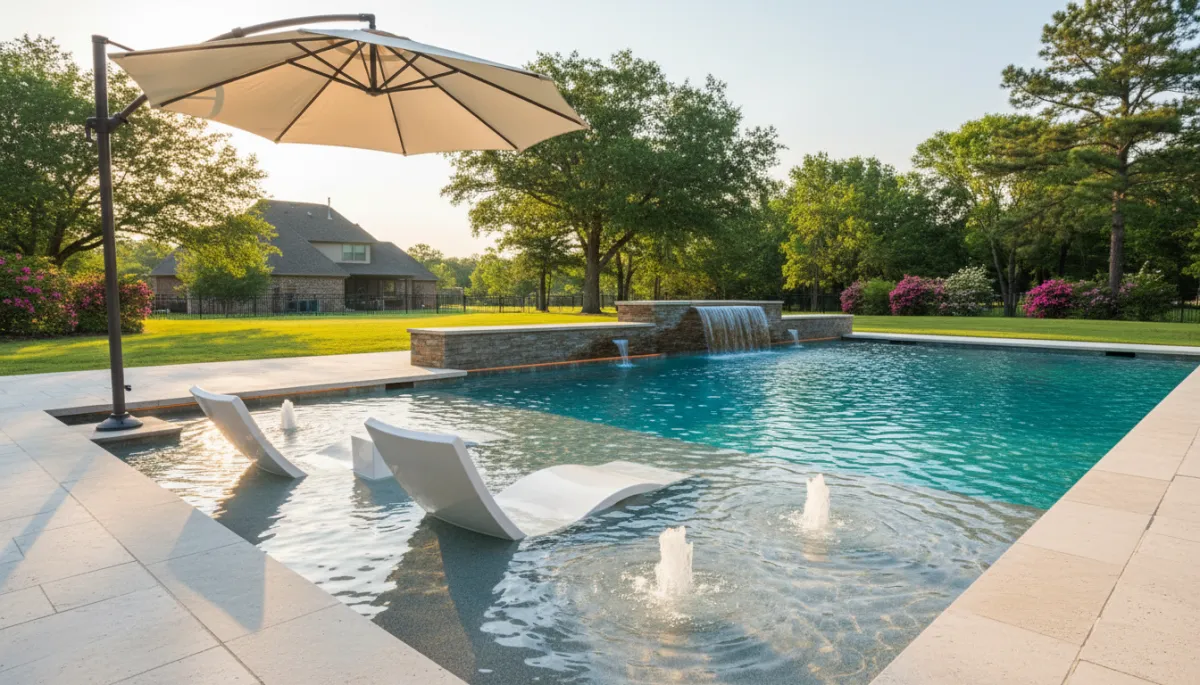
Let's start simple. A tanning ledge is a shallow, flat platform built into your pool. Usually 6 to 18 inches deep. You might've heard it called a Baja shelf, sun shelf, or Cabo shelf. Different names. Same basic idea. It's that big shallow area you can sit in, put loungers in, or let the kids splash around on without getting in over their heads.
It gives you a smooth, easy transition from the deck into the pool. No big step down. No shock of going straight from hot concrete into deep cold water. You just walk in like you're at the beach, stop where you're comfortable, and relax.
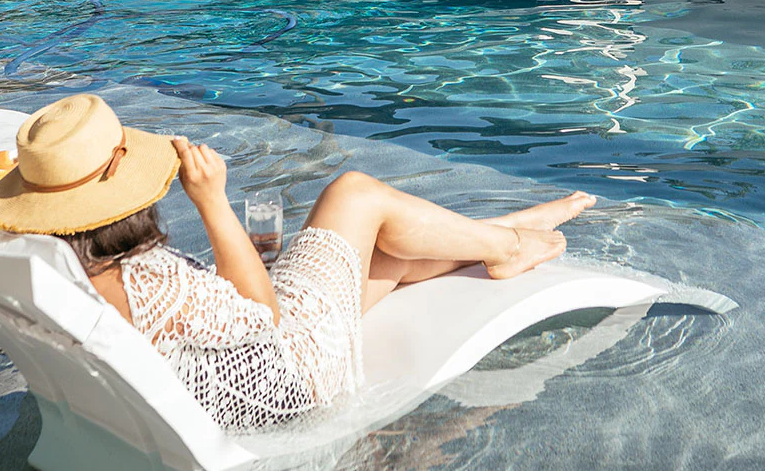
For a lot of my clients, that tanning ledge becomes their favorite spot. They sit there with a cold drink, feet in the water, keeping an eye on kids or grandkids playing nearby. Simple, comfortable, and used every single day in summer.
You want a way to cool off without swimming laps all the time. You want a spot for furniture in the water. You want a safe zone for the little ones. A tanning ledge checks all those boxes in one clean piece of design.
Because I build custom gunite pools, I'm not stuck with a mold. Every project is custom. I can shape that shelf however you want. Curved, straight, wide, narrow. Wraps a corner. Sits off to one side.
We shoot the concrete right over a steel framework that I design, so we're not limited by pre-made shapes. That's a big advantage if you've got a tricky yard in Longview or a tight space behind a house in Tyler or Marshall.
Choosing the Right Depth for Your East Texas Pool
Depth is where a lot of folks get stuck. Six inches? A foot? Deeper? Here's how I walk people through it during a design meeting. We look at how you actually live. Who's using the pool? Kids? Dogs? Grandparents? Mostly loungers or strong swimmers? Then we pick the depth that fits your family.
6 Inches Deep
Six inches is very shallow. Think ankle to lower-shin deep on most adults. This is perfect if you've got toddlers or very small kids. They can sit and crawl around in it with water just brushing over their legs. You're right there with them, sitting on the edge or on a low chair, not worried about them slipping into deeper water.
Dogs love a 6-inch shelf too. They hop in, cool their paws, then hop back out. I've got several clients in Kilgore and Nacogdoches who say their dog uses the tanning ledge more than anyone else in the family.
At this depth, when you sit in a low chair, the water usually covers your legs but doesn't get up to your waist. So it's more of a "feet in the water, body in the sun" situation. Great if you like to tan and don't mind the heat on your upper body.
12 Inches Deep
Twelve inches is my sweet spot recommendation for most East Texas families. About a foot of water gives you the most versatility. Adults can sit in loungers or on the ledge itself and have water up to around midsection. Kids can still play safely. It's deep enough to feel like "real" water, but not so deep that you lose that easy, relaxed feel.
If you like to lay back on in-water loungers, 12 inches works great. You feel cooled down from the chest down. Your back stays supported by the chair. It's also a good depth for grandparents who want to sit and move slowly without worrying about losing their footing.
18 Inches Deep
Eighteen inches is getting into bench territory. Great for adults who want more of their lower body under water while still sitting. If you're the type who likes to sit and talk for hours, legs and hips fully under water, this can feel fantastic in our hot, humid summers.
It's less ideal for very young kids though. They'll need closer supervision on a shelf this deep, since it's closer to knee or thigh height on them instead of just ankles.
From an engineering side, each of these depths means something different for structure. With my mechanical engineering background, I don't just "eyeball" this stuff. I run through load capacity in my head. I look at the span of the shelf, the thickness of the gunite, and the steel layout. A 6-inch shelf with two loungers has different stress points than an 18-inch shelf with heavy furniture, bubblers, and a few adults sitting on the edge.
For every custom gunite pool, I calculate the support needed so you never have to worry about cracking, sagging, or long-term movement. That's the kind of detail that keeps a pool solid for decades in our shifting clay soil.
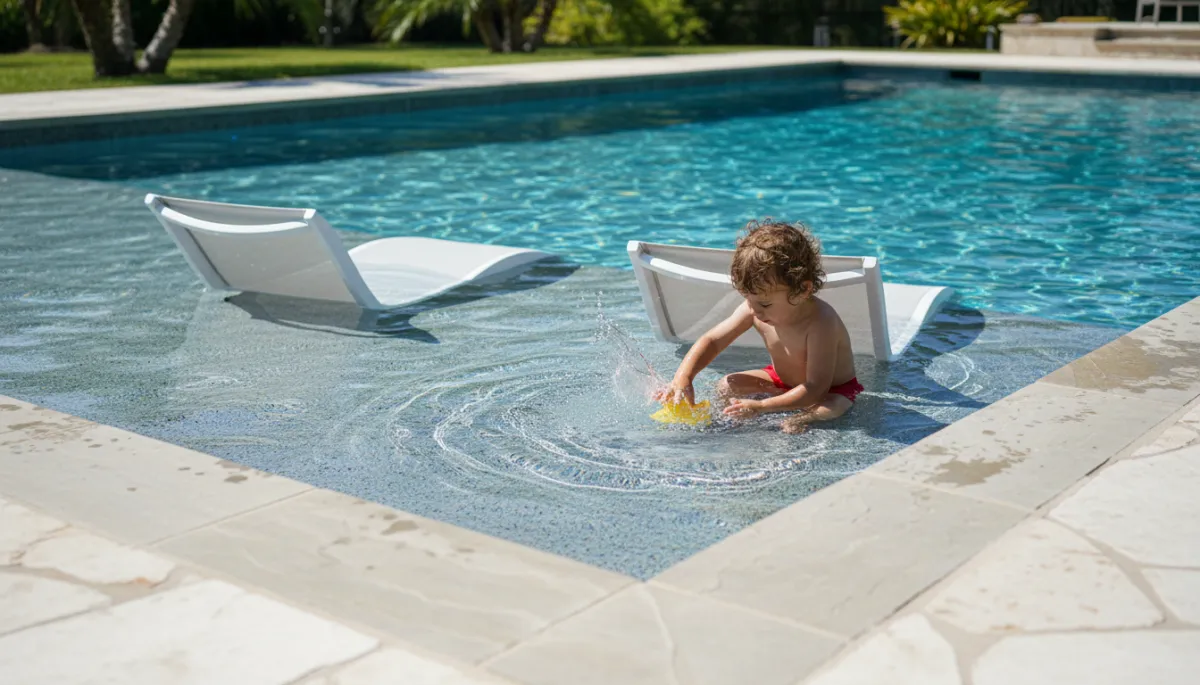
A 12-inch tanning ledge usually becomes the most-used spot in the whole pool.
Design Features Worth Adding to Your Tanning Ledge
Bubblers
Kids go crazy for bubblers. Those little jets that send water up in a soft column or gentle spray? They'll play in those for hours. But bubblers aren't just for fun. They keep water moving on the shelf. That's important in shallow, warm water. Stagnant water on a hot day in Longview or Tyler can grow algae fast. Bubblers help keep it fresh, clear, and cooler. I size and place them so you get good circulation without blasting water in your face while you're trying to relax.
LED Lighting
I'm a big fan of LED lights in and around tanning ledges. They pull almost no power, last a long time, and give you both safety and ambiance. Most of the quality LED units we use have a 10 to 15 year lifespan. You can go with soft white, or color-changing lights that shift from calm blues to fun party colors.
At night, a lit tanning ledge becomes a natural place to sit and talk. You can see exactly where the shallow area starts and ends, which is great for kids and guests who don't know your pool yet.
Umbrella Sleeves
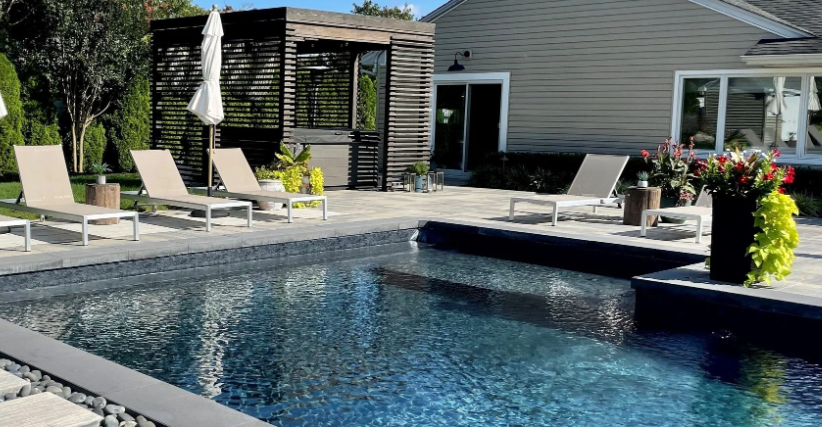
In East Texas heat, shade on a tanning ledge isn't optional - it's essential. I always include umbrella sleeves. These are built right into the shelf. We set a sleeve into the gunite, and it runs at least 8 inches into the shelf floor for strength. You slide your umbrella pole in, and it stays put, even with a little wind.
That shade keeps the water cooler, protects your skin, and makes the shelf usable even in the hottest part of a 104°F afternoon. It also helps your furniture last longer, since direct sun fades and weakens cheaper plastics fast in zones 8a-8b like ours.
Water Features and Fire Bowls
If you want that "resort in my backyard" feel, water features and fire bowls along or near the tanning ledge look incredible. I've done cascading waterfalls that spill gently toward the shelf, scuppers that send smooth sheets of water into the pool, and spillways from raised spas that flow right past the ledge.
At night, we can add gas-powered fire bowls for that fire-and-water effect. Flip a switch, and you've got dancing flames reflecting off the water. It turns a regular evening in Longview into something that feels like a vacation.
Built-In Seating
We can also mold permanent seating right into the tanning ledge. Think raised pads, benches, or contoured seats that are part of the gunite shell. No wobble. No shifting. Just smooth, solid places to sit that never blow away in a storm.
This works great if you like a clean look without a bunch of furniture, or if you know you'll always want a certain seating layout. Because every project is custom, I sketch this out during your 3D design renderings so you can see exactly how it will look and feel before we ever dig.
💡 Pro Tip: When we meet, bring photos of pools you like. I'll pull the best ideas from those and then engineer them to fit your yard, your soil, and your family.
Who Gets the Most Out of a Tanning Ledge (Spoiler: Almost Everyone)
Over the years, I've watched a lot of families use their pools. I go back for service calls, upgrades, or just to check in. The tanning ledge always tells a story.
Here's who really loves them the most.
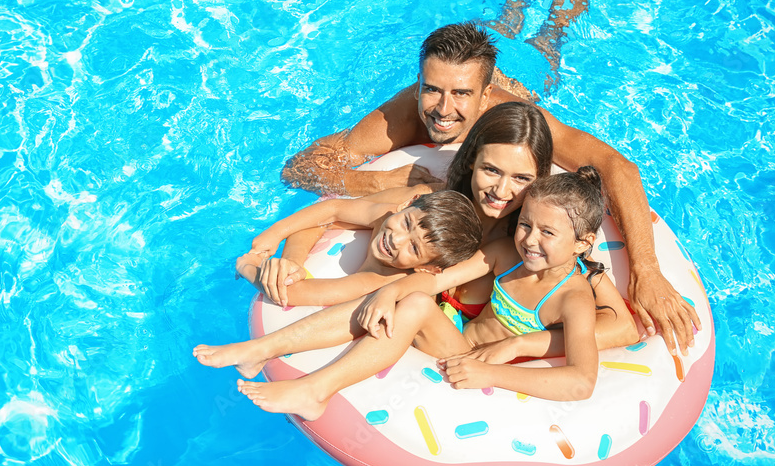
Families with young children: Parents sit on the ledge or in loungers while kids splash in shallow water. They feel safe. Kids gain confidence. The ledge becomes the "kiddie pool" built right into your main pool.
Dog owners: If you have a dog, you'll wonder how you ever had a pool without a tanning ledge. Dogs cool off, drink, and hang out on the edge. No frantic paddling in deep water. Just calm, happy pets.
Multi-generational families: Grandparents can sit on the ledge without worrying about steps or deep water. Toddlers can play right in front of them. Mobility issues become less of a concern when you've got a big, flat, shallow area to move around in.
Party hosts and entertainers: When you have people over, the tanning ledge becomes the natural gathering spot. Folks sit with a drink, feet in the water, talking. It feels like a sunken living room in your backyard.
People who love lounging more than swimming: Some of my clients hardly ever go to the deep end. They live on that shelf. Book in hand. Music on. Maybe a game on the outdoor TV. That's their happy place.
Honestly, I see grandparents using tanning ledges just as much as grandkids. It's easy on the joints. You can sit, stand, or move slowly without feeling rushed. In our hot climate, that gentle, shallow water feels like a relief. You cool off without the shock of full immersion. That's a big deal for older joints and hearts.
Tanning Ledge Furniture - What Actually Works in East Texas Heat
Let's talk furniture. This is where a lot of people try to save a little and regret it later. Our sun here in East Texas is brutal on cheap plastics and fabrics. In zones 8a-8b, with strong UV and long summers, low-quality furniture can fade, crack, or warp in a season.
Marine-grade, UV-resistant materials: Look for furniture made for in-pool use. It should handle chlorine or saltwater, strong sun, and constant moisture. Non-porous surfaces clean easier and don't soak up chemicals.
Lounge chaises: These are the classic in-water loungers you see in resort photos. The good ones are designed to fill with water so they don't float. You set them on the shelf, they sink a bit, and stay put.
Upright chairs: Adirondack-style chairs or similar shapes work great on shallower shelves. You sit upright, feet in the water, easy to stand up and move around.
Side tables: Some in-pool side tables have built-in coolers or storage. Nice touch if you don't want to keep walking back to the house for drinks or sunscreen.
For umbrellas, I like extended-height poles so the canopy clears your head while you're sitting low in the water. Lots of color options, but I usually suggest something that works with your decking and coping tones. Neutrals hold up well and don't look dated in a few years.
In winter when we get those occasional freezes, you'll want to pull the cushions and maybe some of the lighter pieces and store them. That's just part of living in East Texas. Quick five-minute job that can add years to your furniture life.
My honest recommendation: invest in quality furniture for your tanning ledge. Start with the basics - two good loungers, one umbrella, one table. Use the pool for a season. Then you'll know if you want to add more pieces later. I'll size your ledge during design so you've got room to grow.
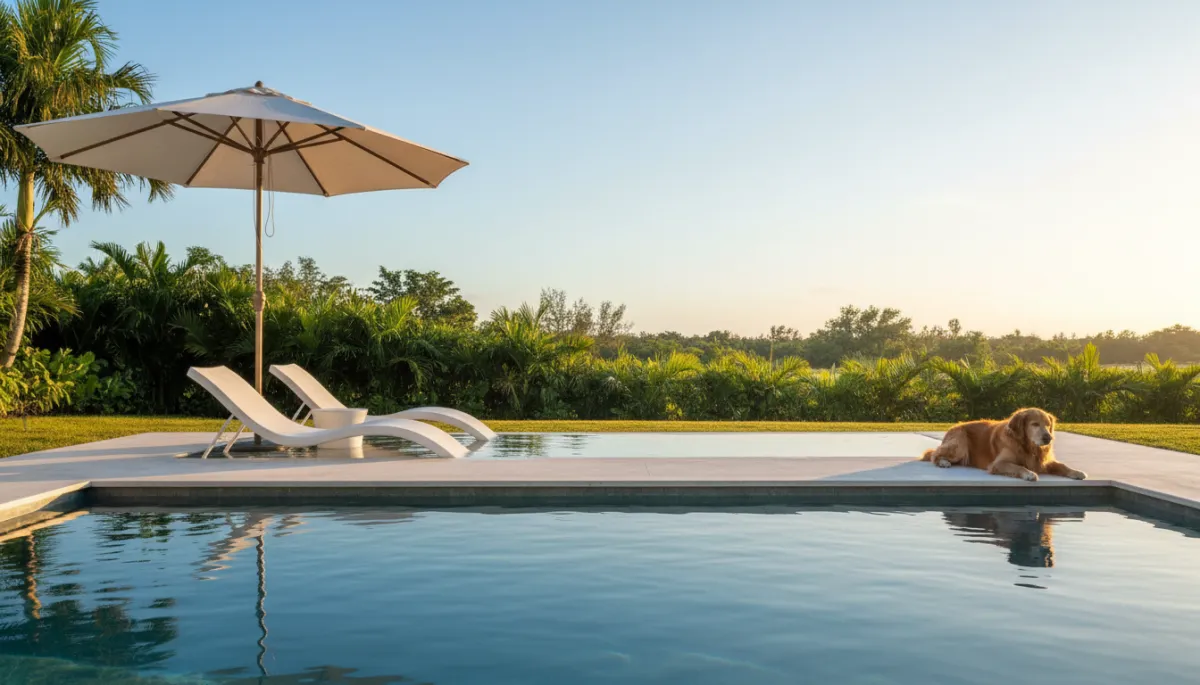
Quality in-pool furniture holds up to East Texas sun, water, and daily use.
Engineering a Tanning Ledge in East Texas Clay Soil
Now we get into the part most folks never see, but it matters more than anything. Our soil out here is clay-heavy. When it gets wet, it expands. When it dries out in August, it shrinks and cracks. With 49 inches of rain a year, hot summers, and periods of drought, that soil moves a lot. If you don't respect that, your pool will tell on you in a few years. Cracks. Shifting. Uneven spots.
A tanning ledge is a wide, shallow slab of concrete sitting on top of that moving soil. So the base prep has to be right. We start with excavation to the proper depth. Then we build a compacted gravel base under the pool and shelf. That gravel gives water somewhere to go and helps spread loads out.
On top of that, we build a reinforced steel framework. I lay out the steel like I'm designing a small bridge. Grid spacing, bar size, tie points - all chosen based on the ledge size, depth, and what we're putting on it. People. Furniture. Water features. Everything has weight, and I account for it.
I also plan control joints and stress points so if the soil does move a bit, the pool knows where to flex and where to stay rigid. That's a big part of why I only build in gunite. Gunite gives me the flexibility and structural integrity to build a tanning ledge that can handle East Texas clay and climate. Other systems just don't give you that same control over shape, thickness, and reinforcement.
I also build a slight slope into the shelf. Usually 1 to 2% toward the main pool. You won't feel it when you're standing there, but it keeps water moving and draining. That helps prevent algae, keeps debris from collecting, and improves overall circulation.
Between the base prep, steel, gunite, and slope, you end up with a tanning ledge that's not just pretty, but engineered to last decades in real East Texas conditions.
📌 Key Takeaway: In our clay soil, structure matters as much as looks. A well-engineered tanning ledge saves you headaches and repairs down the road.
Common Concerns I Hear (and Honest Answers)
"Will it take up too much swim space?"
Short answer: yes, a tanning ledge does reduce your total swim area. It's a big shallow section where you're not doing laps. I like to be honest about that.
The fix is simple though. When we're designing your pool, we can add 4 to 6 feet to the pool length or adjust the width to make up for that footprint. You still get plenty of room to swim, plus the shelf you'll use every day.
Most families end up using the tanning ledge more than the deep end anyway. So you're trading a little unused deep water for a highly used shallow hangout. In my book, that's a smart trade.
"How do you keep it clean?"
Robotic cleaners are great, but most of them can't climb up onto a flat shelf. So the tanning ledge needs a little extra attention. You've got two main options.
One is an in-floor cleaning system with a dedicated head on the shelf. That pops up and pushes debris toward the main pool, where your circulation system handles it.
The other option is simple manual care. Two or three minutes of brushing, two or three times a week. That's usually enough to keep algae from grabbing onto that warm, shallow surface. I show you exactly what brush to use and how to do it during startup. It's quick and easy once you get in the habit.
"Won't the water get too hot?"
Shallow water does warm up faster. No way around that. On a 104°F afternoon in Longview or Tyler, that water can feel pretty warm.
Some folks love it. Kids especially. It's like a warm bath where they can splash without getting chilled. It also extends your pool season into spring and fall, when deeper water might feel too cold but the ledge feels just right.
For some people, mid-summer shelf water is a little too warm. That's where umbrellas and shade structures come in. With umbrella sleeves and a good canopy, you can keep that water noticeably cooler and more comfortable, even on the hottest days.
"Is it worth the investment?"
A tanning ledge is an add-on that affects your overall project investment. I won't pretend it's free. But here's my honest perspective: it's typically the most-used feature in family pools. It adds real daily comfort. It gives you a resort-style feel. And it helps your home stand out if you ever decide to sell.
I've never had a client tell me they regret adding a tanning ledge. Not once. I have had a few tell me they wish they'd gone bigger.
Since every project is custom, we'll walk through your options together and talk through cost during a consultation. I use transparent itemized pricing, so you see exactly how each feature affects your total investment, with no hidden fees.
Frequently Asked Questions
Q: What's the best depth for a tanning ledge?
A: For most East Texas families, I recommend about 12 inches. It's the most versatile. Works for adults, kids, and furniture. Deep enough to feel like real water, shallow enough to feel safe and social.
Q: Can I add a tanning ledge to an existing pool?
A: With gunite, renovation is possible. We can cut into the existing shell and add a shelf, but it's not a small job. It requires a full engineering assessment of the existing structure, soil conditions, and plumbing. I'd come out, inspect the pool, and then tell you honestly what's realistic before you decide anything.
Q: How do I clean a tanning ledge?
A: Plan on 2 to 3 minutes of manual brushing, 2 to 3 times per week. That keeps algae from getting a foothold. Or we can design an in-floor cleaning system with a dedicated head on the shelf to help push debris off. I'll show you how to care for it during startup either way.
Q: What furniture works best on a tanning ledge?
A: Marine-grade, UV-resistant, non-porous pieces designed for in-pool use. Weighted loungers or ones that fill with water so they don't float. Upright chairs, side tables, and umbrellas that can handle chlorine or saltwater. Cheap furniture won't last in our sun. Quality pieces are worth every penny over time.
Q: Do tanning ledges work with saltwater systems?
A: Yes. Saltwater systems work fine with tanning ledges. You just need furniture that's rated for saltwater, just like you would on a boat. Marine-grade materials hold up much better than regular patio sets.
Q: How does East Texas clay soil affect construction?
A: It affects everything. We deal with expansion, contraction, and water movement. So I design your pool with specific base prep, reinforced steel, control joints, and proper drainage. My engineering background and local experience with Longview, Tyler, Marshall, and Kilgore soils mean I'm not guessing. I build for what the ground is actually going to do over time.
Q: What size tanning ledge do I need?
A: As a general guide, I like at least 6 by 8 feet for one lounge chair. Around 8 by 10 feet for two chairs comfortably. If you want an umbrella and multiple chairs, 10 by 12 feet or larger feels right. During design, I'll drop furniture into your 3D renderings so you can see spacing before we pour anything.
Conclusion: Why Tanning Ledges Make Sense for East Texas Families
Out here in East Texas, a pool isn't just a luxury. It's how a lot of families survive the heat and still enjoy the outdoors. A well-designed tanning ledge takes that pool and makes it way more usable. It gives you a safe shallow area for kids, a cool spot for dogs, an easy-entry zone for grandparents, and a built-in lounge for anyone who just wants to sit and relax in the water.
When I design your pool, we look at everything together. Your yard. Your soil. Your sun patterns. Your family. I build a full 3D design so you can see exactly how the tanning ledge, steps, benches, and deep end all work together before we break ground. We talk through depth options, furniture plans, and shade. I give you transparent, itemized pricing, so you see how each feature affects your overall project investment. No surprises. No hidden fees. Just clear choices and honest advice.
I also keep my workload realistic. I only take on about 6 to 7 projects at a time. That lets me stay involved in every step, answer my phone and texts, and keep timelines honest. Most builds run 8 to 12 weeks, depending on weather and design. I'd rather tell you the truth up front than promise something impossible and disappoint you later.
If you're starting to picture your own backyard with a wide, cool tanning ledge, in-water loungers, maybe a couple of bubblers and a shaded umbrella, let's talk. We'll sit down, sketch out ideas, look at your yard, and build a custom design that fits your life.
Doug Johnson
Patriot Pool Co.
Longview, Texas
Ready to start planning your pool? Contact us today.